Get Full Government Meeting Transcripts, Videos, & Alerts Forever!
Get email alerts on the Edge Esmeralda Development topic
No spam. Unsubscribe anytime.
Developers defend Edge Esmeralda plan as Cloverdale residents press on investor identities, water and contamination
Summary
At a Cloverdale public Q&A, residents pressed developers of the Edge Esmeralda/Esmeralda project on who is funding the proposal, the scale and density of 605 homes, potential impacts to the Russian River and how a on‑site 'reusable fill area' was remediated. Developers said investor names are private, cited regulatory oversight by the North Coast regional water board, and promised to share technical reports.
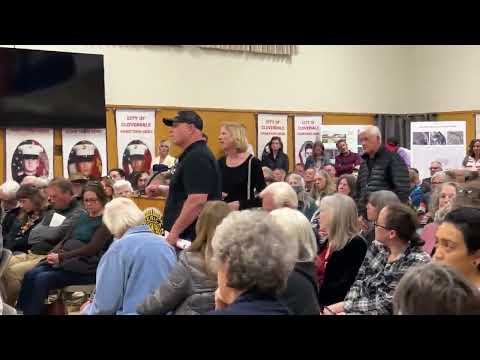
At a public question‑and‑answer session about the Edge Esmeralda/Esmeralda development, residents raised sustained concerns about investor secrecy, the proposed density and affordability of roughly 605 new homes, potential impacts to local water supplies and endangered fish, and the safety of a large on‑site "reusable fill area." Developers defended the plan, described prior remediation overseen by the regional water board, and said infrastructure and entitlement costs require higher density.
The meeting opened with Jonathan Hall, a local resident, asking for clarity about who is investing in the project and why investor names are not disclosed. "The primary questions that I have really relates sort of to transparency," Hall said, adding that multiple entities were listed in project materials. A project representative replied that some backers are private individuals and that the team is protecting identities "because they are private individuals" and to prevent harassment.
Residents also questioned whether the project’s density is necessary. Paul Perry told the developers the proposal would "blow us out of our little country town," asking why the project could not be less dense. A project team member said infrastructure — sewer, water, treatment and stormwater systems — is expensive and that the economics require enough residential and hotel units to support that infrastructure, arguing compact development can preserve open space and trees.
Water availability and environmental protection were recurring themes. Janet Green read excerpts from an environmental consultant alleging the project could reduce Russian River flows and asked whether studies have been done on impacts to coho salmon and steelhead. Developers pointed attendees to a draft addendum to the environmental impact report and to transportation and hydrologic studies included there. "Both of those issues we mentioned are discussed extensively in that addendum," a project representative said.
The team addressed historic contamination and remediation in an area they called the "reusable fill area" (RFA). Developers described prior actions ordered by the North Coast regional water board, including removal of treated wood piles, mixing of some material with clean soil, testing and monitored closure. The team explained that California uses risk‑based remediation standards and that certain commercial uses can be permitted where residential uses would require more stringent remediation. "The legal name for it is the reusable fill area, the RFA," a project team member said, describing regulatory oversight and soil‑mitigation plans.
Neighbors also pressed the project on affordability and community integration. Betty Landry, a 23‑year Cloverdale resident, asked whether existing residents would be able to afford homes in the new neighborhood; the project representative said there will be a range of housing types, including smaller units and embedded accessory dwelling units, and that lots may be sold to builders. Angel Rodriguez and other residents urged developers to plan for long‑term sustainability and to integrate Cloverdale's Hispanic community; the team said it has Spanish‑language materials on its website and plans outreach with local organizations.
Several attendees from neighboring unincorporated areas and nearby towns asked to be consulted on water and infrastructure. Benny Allen, a Geyserville resident and planning committee chair, said the project "abuts Geyserville" and urged regional coordination on wells and water resources; developers said they have been meeting with regional agencies and welcomed further engagement.
On fiscal impacts, the project team presented an estimated annual contribution to the city’s general fund and suggested the city decide how to allocate new revenue for affordable housing, social services or first‑time buyer programs. The developers repeatedly offered to share technical reports, the EIR addendum and an online FAQ and invited attendees to follow up offline.
No formal action or vote occurred at the session; developers said further environmental analysis and entitlement steps remain, and they offered additional community meetings and to provide detailed documentation to the public and regulatory agencies. The project team said investor identities could be disclosed at a later funding stage but that, for now, privacy protections apply to some private individuals backing the development.
The next procedural step referenced by developers is completion and public posting of the draft EIR addendum and continuing entitlements; residents requested ongoing public updates, more direct outreach to neighboring communities, and additional clarity on remediation standards and specific affordability commitments.