Local clinic warns federal tax-credit cuts and eligibility changes could raise uninsured rates and strain hospitals
Loading...
Summary
Doctors Care coverage director told League of Women Voters members that cuts to federal premium tax credits, limitations on program expansions and changes to eligibility could increase uninsured rates, push people into emergency care and raise uncompensated care costs for hospitals and safety-net clinics.
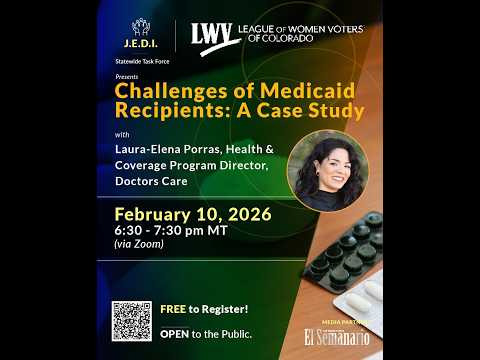
At the League of Women Voters of Colorado JEI task force meeting on Feb. 13, Laura Elena Perez of Doctors Care outlined how recent federal reductions to Marketplace premium tax credits and tighter eligibility would ripple through Colorado’s safety-net system. Perez said she expects an increase in the uninsured and more demand for uncompensated emergency care: "You're gonna start to see an increment in uninsured rates... hospitals are gonna start closing down," she said, describing a worst-case consequence of sustained coverage losses.
Perez explained that federal cuts to eligibility and expansion reduce the number of people with a primary-care home, increasing emergency-room use and uncompensated charity care for hospitals. She contrasted Doctors Care with Federally Qualified Health Centers (FQHCs): her clinic accepts Medicaid and CHP+ but is not reimbursed at federal FQHC rates. "Federally qualified health centers... are reimbursed at a federal rate for accepting Medicaid. As a safety net clinic, we do accept Medicaid patients and CHP, but we don't get reimbursed at that rate," she said, noting reimbursement differences affect clinic finances and capacity.
Perez said programs that attempted broader coverage (she cited the Cover All Coloradans effort as an example) have been constrained by cuts and administrative changes. She urged community advocates to help residents understand special enrollment windows and navigator services and said clinics are bracing for higher demand if more people lose coverage.
The session included participant questions about emergency-room billing: Perez confirmed hospitals must provide emergency care regardless of ability to pay, but costs for uninsured patients become uncompensated hospital losses. She recommended steering patients to primary care and using navigator support to prevent avoidable ER use.
The League moderator closed the meeting after Perez shared contact details for the coverage program and encouraged members to distribute enrollment resources locally.