Get Full Government Meeting Transcripts, Videos, & Alerts Forever!
Get email alerts on the Homelessness topic
No spam. Unsubscribe anytime.
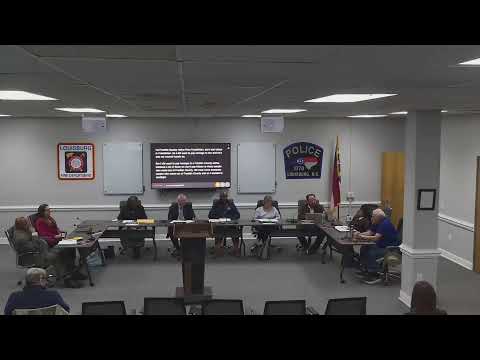
Louisburg Council discusses $5,000 support for 'White Flag' shelter, forms ad hoc committee
Summary
The council reviewed a proposal to donate $5,000 to the Methodist Church and Interfaith Council for the White Flag emergency shelter, raised concerns about county coordination and liability, and voted to appoint an ad hoc committee to coordinate shelter planning and outreach.
Louisburg Mayor Neal told the council the town had been asked to help cover operating costs for the White Flag emergency shelter and proposed a $5,000 donation to be split into two $2,500 increments for winter and later summer cooling-station support. "The total again was is $5,000, given in $2,500 increments," the mayor said.
An Interfaith Council representative described the shelter’s recent operations and limits on volunteers, saying White Flag opens when temperatures drop below a locally adopted threshold and noting national guidance uses 35°F as a trigger. The representative said the church and interfaith partners had kept the shelter open multiple nights during recent cold weather, trained volunteers and worked with county social services on emergency accommodations: "The national guidelines is 35 degrees. Our church has chosen to use 20 if there's no precipitation, 25 if there is, simply because we don't have enough volunteers." (Interfaith Council representative, transcript)
Council members praised the volunteer effort but pressed for more clarity on how town funds would be used and whether the county is contributing. Councilmember (unnamed) asked whether money from the town might duplicate county funding or duplicate other aid: "Is there anything that the county is also doing?" Mayor Neal and representatives said county officials had discussed support but the county ultimately opened a separate facility and provided cots and contingency support in some instances. The Interfaith Council representative said the county provided cots, MREs and emergency generation support and that the church returned unused MREs.
Multiple council members urged a coordinated, deliberate approach rather than an immediate appropriation without a plan. Councilmember (unnamed) recommended forming an ad hoc committee to convene council members, staff and outside organizations to clarify roles, liabilities and funding flows. The mayor agreed and said he would appoint a small ad hoc committee within 24 hours to participate in ongoing conversations with the county and nonprofit partners.
The council did not record a formal appropriation vote for the $5,000 donation in the transcript excerpt; members treated the contribution as a matter for further planning and directed staff and the new ad hoc committee to return with specific recommendations on funding, county coordination and formal action if needed.
Next steps: the mayor will appoint two council members (not a majority) to the ad hoc committee, staff will follow up with county contacts, and the committee will report back with a plan and recommended use of any town funds when available.