
Blue Island committee reviews $64.1 million draft appropriation, seeks fixes for $308,000 shortfall
Get AI-powered insights, summaries, and transcripts
Subscribe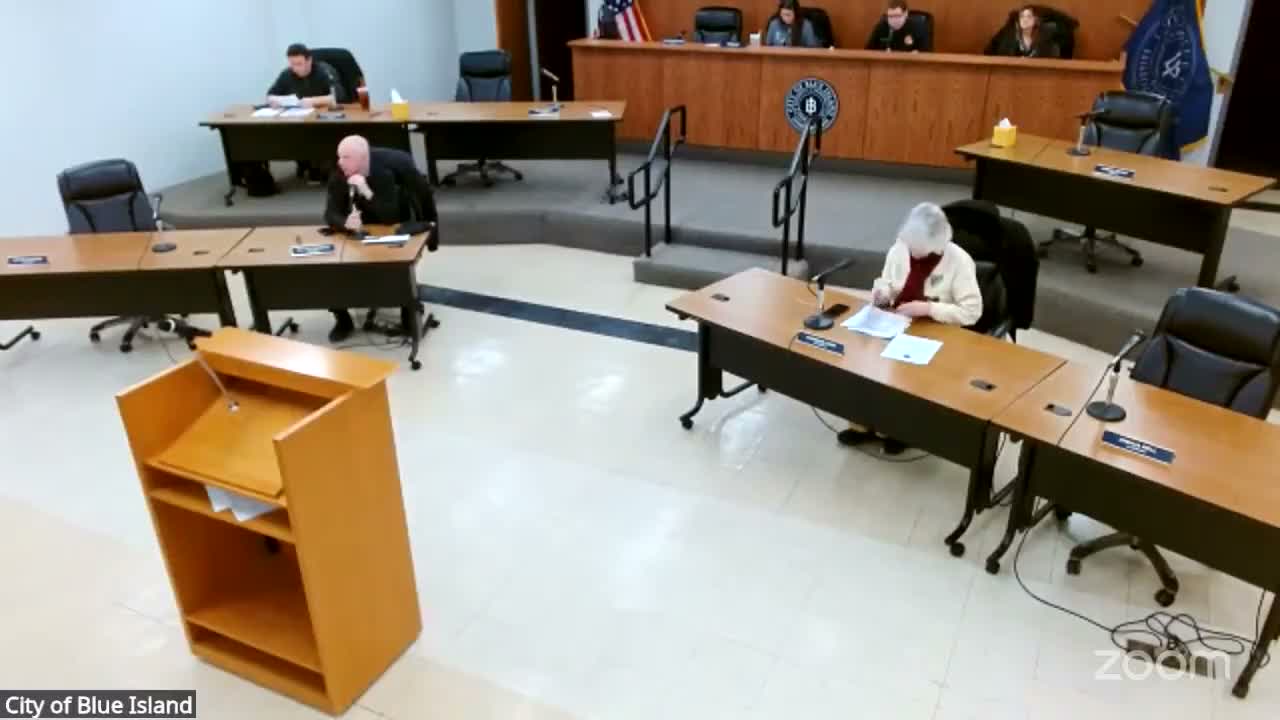
Summary
City leaders reviewed a draft $64.1 million 2026 appropriation, identifying a roughly $308,000 operating gap after a $10 million water bond is excluded from general revenues; council members were asked to submit questions before a planned March 10 final vote.
Blue Island officials reviewed the first draft of the 2026 appropriation on Feb. 12, focusing on revenues and a small operating shortfall that staff said they expect to close before the council’s March 10 vote. Mayor Ray Anderson opened the meeting and asked department heads and aldermen to review line items and return questions in the next three weeks.
City administration presented the draft appropriation and walked through the city’s total appropriated funds, noting last year’s appropriation was about $66,000,000 while actual spending was roughly $43,500,000. The administration highlighted that the $10,000,000 water bonding is accounted for separately from general revenues, and said, "So what we're really seeing here is a $308,000 deficit in the revenue over expense, which we seek to close between now and March 10".
The draft includes new revenue lines and adjustments: increased sales-tax estimates tied to a 1% measure, a new casino-gaming tax line (about $130,000 collected last year from Wind Creek in Homewood) and several grant revenues included on a best-case basis. Staff said grant revenue and corresponding expenses were placed in the draft so the city can spend those funds if and when grants are awarded.
Administration also pointed to potential one-time property-sale revenue (a $1.4 million baseline tied to a parcel awaiting IDOT approval) as a possible offset to the tax shortfall. Finance staff urged aldermen to review departmental line items closely and suggested there are numerous modest adjustments that could close the remaining gap.
The administration emphasized process distinctions: the appropriation establishes legal spending limits rather than a detailed operating plan, and some funds are restricted (for example, water operates as an enterprise fund and transfers in or out require council action). Department heads were invited to provide more detailed, department‑specific breakdowns (for example, a golf-course and building-department breakdown will be circulated to aldermen).
The committee did not take a final vote on the appropriation; staff asked members to submit follow-up questions and said the goal is to finalize and pass the appropriation at the March 10 meeting. The meeting adjourned after a motion at the end of the session.