
Board reviews interdistrict transfer patterns; superintendent to return with policy options
Get AI-powered insights, summaries, and transcripts
Sign Up Free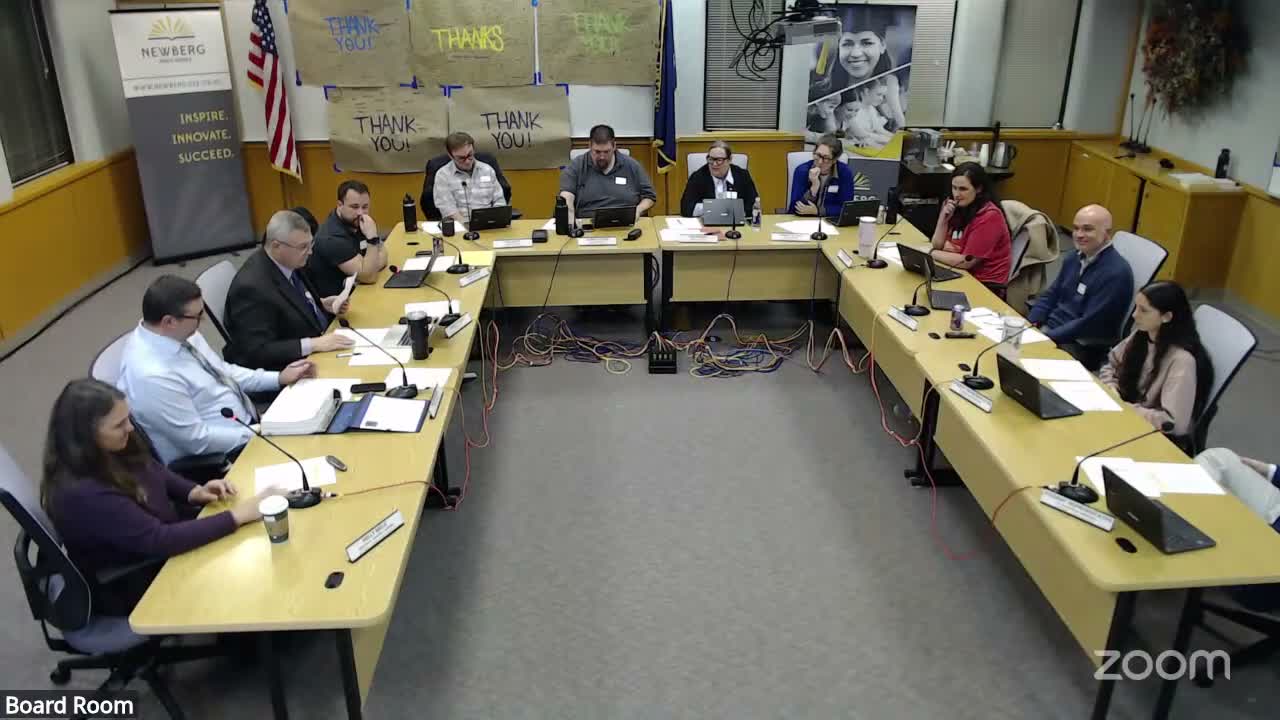
Summary
District presented a transfer report showing 183 transfer requests (97 never-enrolled; 86 enrolled and left), flagged Koa program changes accounting for 20 transfers and asked the board whether to tighten hardship, sibling-release and the 3% cap; board requested motions/options for next meeting.
Dave (district administrator) presented a detailed interdistrict transfer report to the Newberg-Dundee School Board on Feb. 10 that documented 183 transfer requests for the year and explained how the district is categorizing reasons families seek transfers.
The packet sorted transfers three ways: by originating district (Sherwood 51; virtual charters 61; Yamhill‑Carlton 20), by whether students were previously enrolled in Newberg (97 were never enrolled; 86 were previously enrolled), and by stated reasons (homeschool-to-virtual-charter, sibling release, childcare, Koa program dissatisfaction). Dave said many of the 20 transfers tied to Koa stemmed from parents expecting a different curriculum and said the district intends to reform the Koa program.
Under current practice the board sets a numeric board limit (20 this year) that can trigger a lottery; hardship reasons under OAR 25 are limited to death of a parent, active military leave, documented persistent bullying, and childcare. Board members asked for cleaner data, exit interviews, and for staff to draft motion options that would tighten or clarify the board limit, the handling of sibling releases and lottery thresholds, and how the district should treat virtual-charter/online enrollments. A board member noted that some neighboring districts operate a "0 out" policy (no lottery) and that policy choices have different trade-offs for families and district revenue.
Board discussion included budget implications: one board member estimated an $11,000 average per-student revenue and calculated an approximate net loss from transfers when arrivals and departures are considered. The board did not adopt a formal rule change at this meeting; Dave said he would prepare motions/options for the next meeting and recommended formalizing exit interviews and improved record keeping.
Next steps: staff will clean data, prepare scenarios that show how changes to the board limit and hardship handling could alter transfer counts, and present recommended motions for board consideration before the March deadline for interdistrict transfer enrollment planning.