
Dare County commissioners approve putting quarter‑cent sales tax referendum on November ballot to fund parks and recreation
Get AI-powered insights, summaries, and transcripts
Sign Up Free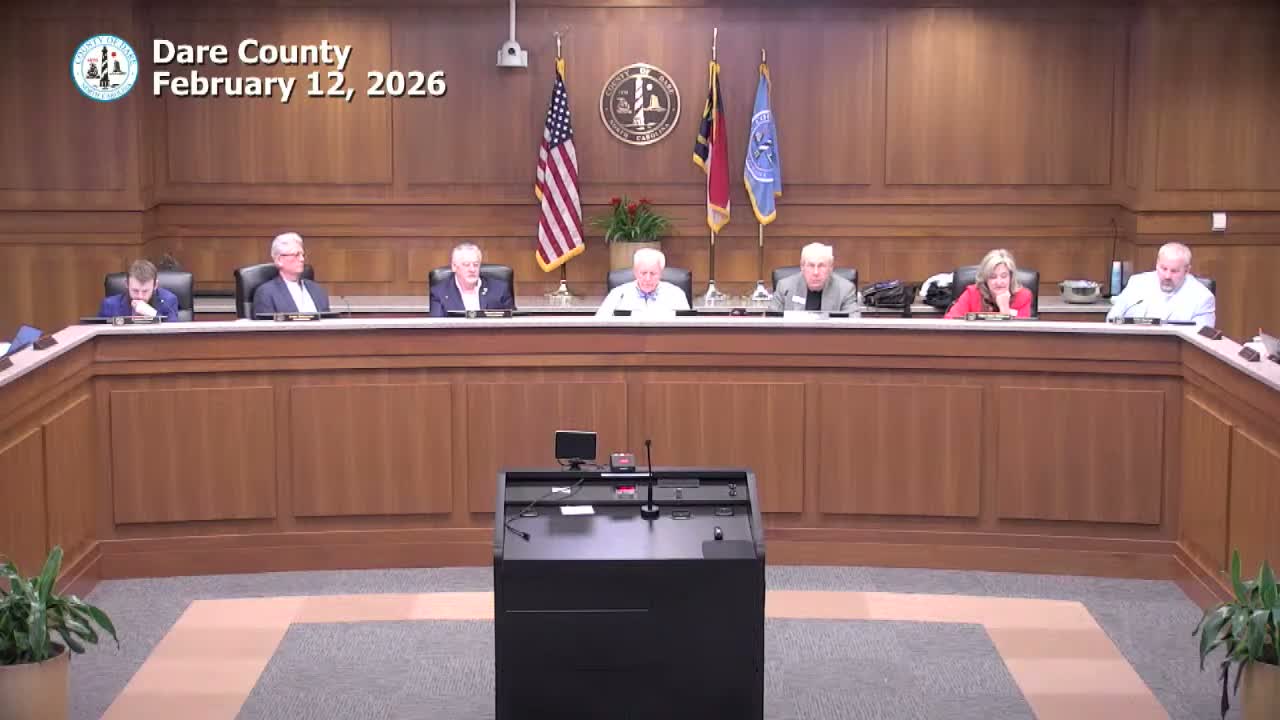
Summary
The Dare County Board of Commissioners unanimously voted Feb. 12 to place a quarter‑cent local sales tax referendum on the November ballot to finance a parks and recreation capital plan estimated at roughly $57 million. County staff said the tax would raise about $6 million a year and shift much of the cost to visitors.
The Dare County Board of Commissioners voted unanimously on Feb. 12 to place a quarter‑cent local sales tax referendum on the November ballot to fund an estimated $57 million parks and recreation capital plan.
County staff and consultants told the board that North Carolina statute (GS 105‑537) allows a quarter‑cent sales tax that the county estimates would generate about $6 million annually. That revenue, they said, could support 20‑year debt service to finance projects identified in a parks and rec needs study — including synthetic turf fields, indoor facility expansions at Westcott Park and northern beaches, splash pads, playground replacements and ADA upgrades.
During a lengthy discussion, commissioners debated project priorities and tradeoffs. Commissioner Crief and others raised concerns about competing county needs — notably staffing and pay pressures in public works and landfill operations — and urged some portion of new revenue be considered for broader county priorities if the referendum passes. Commissioner Irvin (speaker identified in transcript) and others framed the proposal as an affordable, visitor‑shared funding model that would reduce reliance on ad valorem property taxes.
Several speakers flagged safety and operational issues that will need later review if projects proceed: public health and injury concerns associated with synthetic turf (one commissioner requested a separate safety study), the need for additional lighting and parking at new facilities, and long‑term maintenance and staffing costs once projects are built.
County staff said the county cannot use public funds to advocate for or against the referendum, but it can provide factual materials and FAQs. The board asked staff to prepare information for public distribution if the referendum qualifies for the ballot.
The board’s action on Feb. 12 authorizes staff to pursue placing the question on the ballot and to continue refining cost estimates and CIP prioritization. The motion passed unanimously.