
Utah House approves bill widening retail sales of raw milk, 46–20
Get AI-powered insights, summaries, and transcripts
Subscribe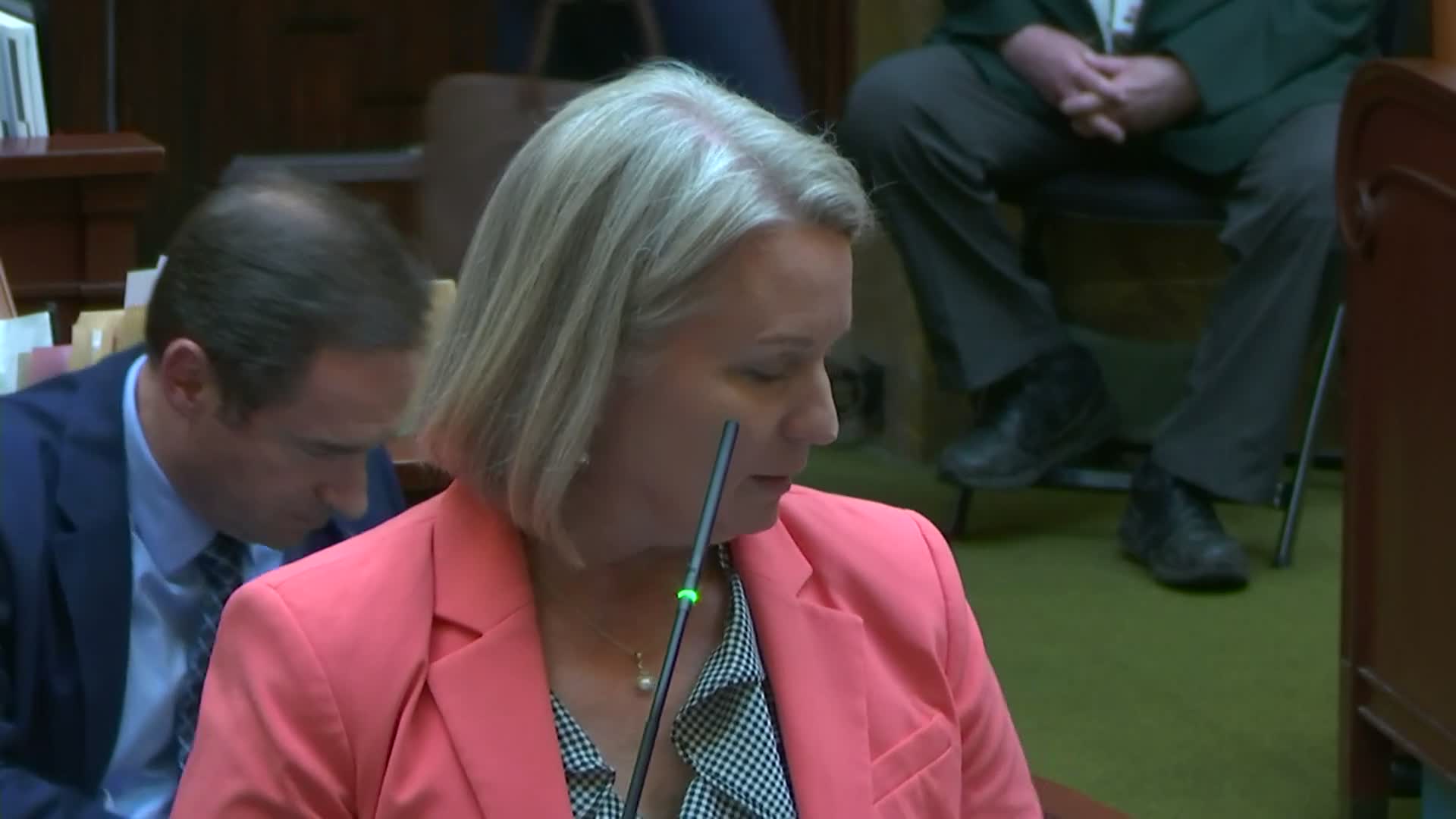
Summary
The Utah House passed House Bill 179 on Feb. 12, 2026, expanding where raw (unpasteurized) milk may be sold, requiring labeling and industry-standard testing and six-month record retention; supporters framed it as support for small producers, opponents warned it weakens production oversight.
SALT LAKE CITY — The Utah House of Representatives on Feb. 12 passed House Bill 179, a measure that expands retail sales of raw (unpasteurized) milk and sets labeling, testing and record-keeping requirements. The second substitute for the bill passed on a 46–20 vote and will be sent to the Senate for consideration.
Representative Chevrier, the bill sponsor, said HB 179 aims to "protect and promote our small producers" by allowing producers greater access to retail markets. She told colleagues the bill removes the 51% store-ownership rule — permitting stores that do not have majority ownership by a producer to sell raw milk if they choose — while requiring separation of raw milk from pasteurized milk in displays, clear labeling with a warning and handling instructions, and industry-standard laboratory testing and six months of retained test records.
The sponsor argued the measure advances consumer choice and local food supply resilience. "I am a big believer in raw milk and the ability of people to be free to choose what they want to drink," Chevrier said. She also noted the bill provides UDAF enforcement tools including cease-and-desist authority and access to testing and records in the event of an outbreak.
Several lawmakers said the bill goes too far in loosening production and inspection standards. Representative Kohler argued that, by separating retail and production rules, HB 179 "removed almost all of those regulations" that would otherwise apply to dairies moving product into markets away from farms. He urged colleagues to delay action so the House could compare this bill with an alternative he is preparing.
Representative Snyder, echoing the Utah Department of Agriculture and Food and the Utah Farm Bureau, warned the measure effectively bifurcates the dairy industry and could create disparate standards for similar products. "This bill takes us far, far away from what we need to be doing in the dairy industry," he said.
Representative Jane Daley Provo questioned whether complainant identities could remain anonymous and whether UDAF could inspect before a documented outbreak. Chevrier said complaints must be substantive and that UDAF can issue cease-and-desist orders and inspect when there is reasonable suspicion or an outbreak; she also said complaint content is public. Daley Provo said requiring complainants to be identifiable could create an "extreme chilling effect" that discourages reporting, particularly in small communities.
The House approved a verbal amendment offered by Representative Lisonbee that struck and replaced specific language in the second substitute; that change was accepted by voice vote. Representative Wilcox moved to "circle" (delay) the bill to allow more time for negotiation on standards; the motion to circle did not carry and debate resumed. Voting was then opened and closed on the second substitute, and the clerk announced final passage.
Under the version passed by the House, producers who sell raw milk at retail must meet the bill's testing, labeling and record-retention requirements; UDAF retains authority to inspect and to impose penalties. The transcript includes references to fines for mislabeling and larger penalties in outbreak scenarios, but specific maximum penalty amounts were not clearly transcribed and are therefore not stated here.
The bill also received floor-level debate that reflected a split between lawmakers prioritizing small-producer market access and those citing public-health oversight and consistent production standards. The measure will now proceed to the Utah Senate for its consideration.
The House completed additional committee reports and adjourned until Feb. 13 at 10 a.m.