
Rules panel approves resolution to require sponsors to identify policy goals and measurable objectives 'if applicable'
Get AI-powered insights, summaries, and transcripts
Subscribe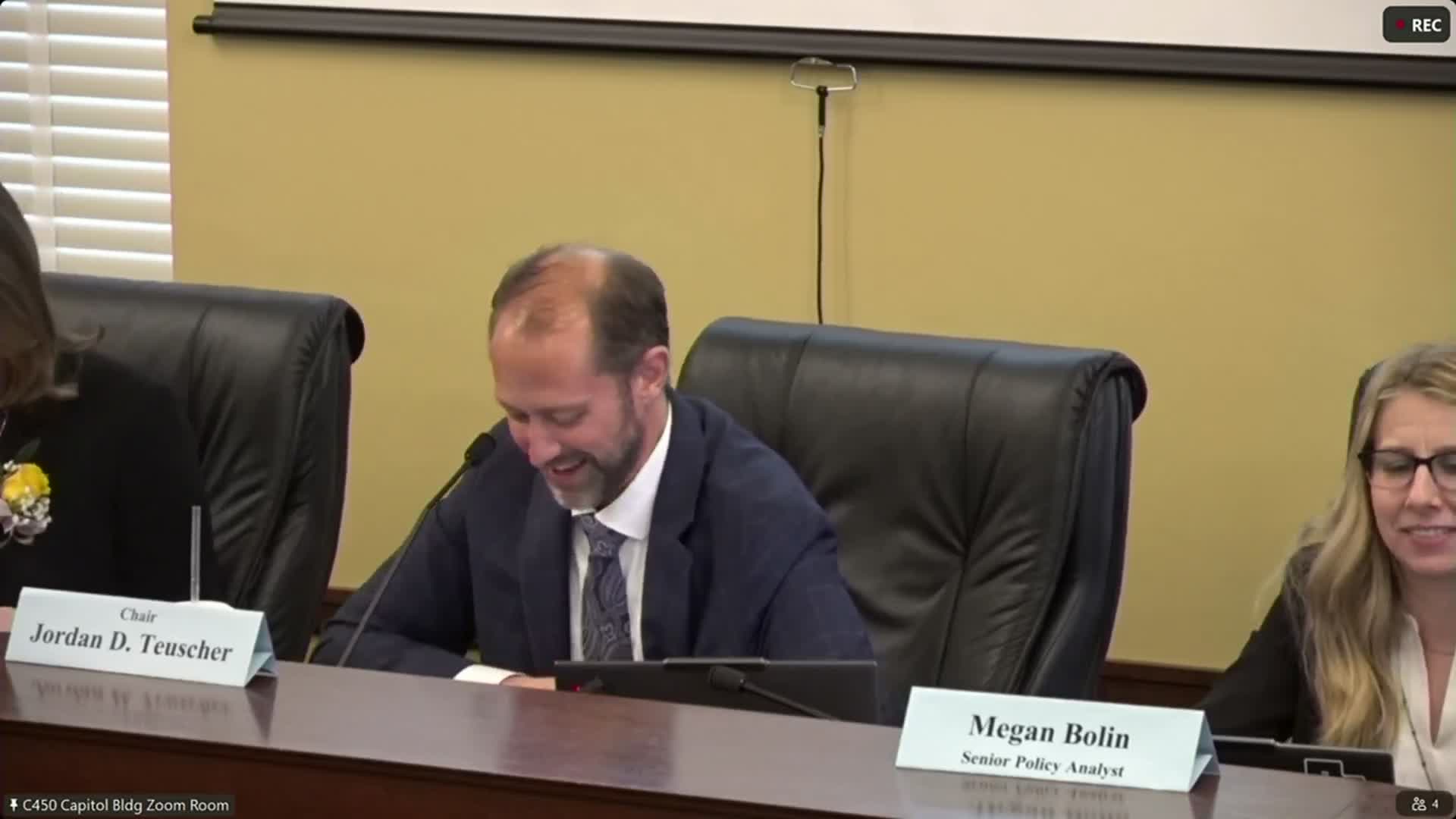
Summary
The Rules Committee voted to favorably recommend HJR 23 as amended, requiring chief sponsors to identify policy goals and, where applicable, one or more measurable objectives to evaluate whether legislation addresses the policy problem.
On Feb. 12 the House Rules Standing Committee favorably recommended House Joint Resolution 23 as amended, a rules resolution designed to introduce a lightweight, metrics-oriented expectation into the bill-drafting process.
Representative Wilcox, the sponsor, framed HJR 23 as a modest step toward continuous improvement: when a legislator opens a bill file they should identify the chief policy goal and, where applicable, one or more measurable objectives that could later be used to evaluate whether the law achieved its intent. Wilcox said the aim is to encourage clearer drafting and provide future reviewers with benchmarks to determine whether legislation met its stated purpose.
Committee members asked whether every bill has meaningful measurable outcomes and about whether goals and drafting instructions would be public. Drafting staff said those instructions are part of drafting instructions (protected until the bill becomes public) and would become public once the bill is public. Representative Matthews moved adoption with a late amendment to insert the phrase ", if applicable," so sponsors only specify measurable objectives when appropriate; that amendment was adopted unanimously. The committee then favorably recommended HJR 23 as amended; Representative Peterson recorded a dissenting vote.
Sponsor and supporters said the resolution is a start to changing culture around legislative drafting, giving future legislators and auditors clearer benchmarks for follow-up evaluation.
What’s next: HJR 23 (as amended) proceeds with a favorable recommendation; implementation will depend on how drafting instructions and any auditor follow-up are handled in practice.