
House Rules panel favorably recommends SJR 5 to allow limited midcase removal to panels for new constitutional court
Get AI-powered insights, summaries, and transcripts
Subscribe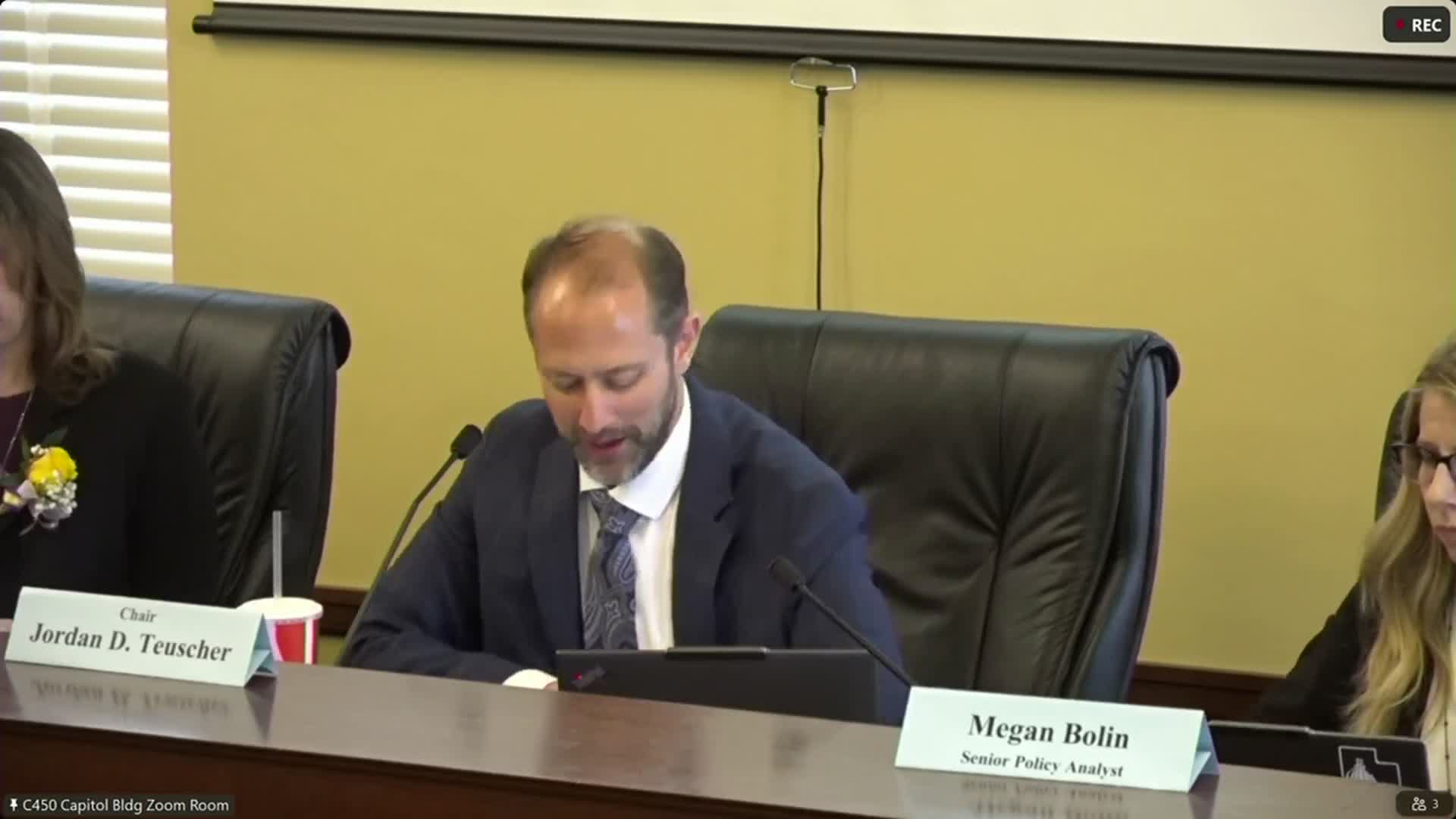
Summary
The House Rules Standing Committee voted 6–2 on Feb. 12 to favorably recommend SJR 5 (second substitute), which amends civil-procedure rules to permit limited removal of cases to the business and chancery court or the new constitutional court and, in a narrow transition window, convene panels midcase.
The House Rules Standing Committee on Feb. 12 voted to favorably recommend Senate Joint Resolution 5 (second substitute), a procedural change to the Utah Rules of Civil Procedure that adds a mechanism for transferring certain cases to the business and chancery court or to the newly created constitutional court and, for a limited time tied to the court’s creation, allows convening a panel of judges midcase.
The proposal’s sponsor, Senator Brammer, said the change is narrow and intended to address cases that fall into the court’s jurisdiction because of the new court’s creation; the special removal window lasts 21 days after the court’s establishment and applies only to new cases after that window closes. "The only thing that you're getting is more eyes on it," the sponsor said, arguing panels give broader perspective and additional clerk support for complex statewide matters.
Michael Drexel, assistant state court administrator, told the committee the judiciary is concerned that the resolution’s language is unprecedented and could allow government actors to change the judge midcase and replace a single judge with a panel. "This language would allow the governor, the legislature, the attorney general to change the judge mid case and get a panel of judges instead," Drexel said, urging the committee to narrow the language so that convening a panel occurs only early in a case and not as a tool to alter outcomes midstream.
Representative Burton, who moved the committee’s favorable recommendation, said he supported the change because panels bring more clerical resources and help spread the workload on lengthy, complex opinions. Sponsor and supporters emphasized the provision is meant to be a limited, transitional measure tied to the court’s creation rather than a general ability to swap decisionmakers during litigation.
The committee recorded a roll-call vote in which several members were recorded individually (Representative Peterson: Yes; Burton: Yes; Hollins: No; Lee: Yes; Matthews: No; Roberts: Yes), and the chair announced the measure passed 6–2. The resolution now moves forward for consideration consistent with legislative procedures.
What’s next: SJR 5 will proceed through the legislative process following the Rules Committee’s favorable recommendation; supporters said they expect the language can be further clarified in subsequent steps if needed.