
Carbon-credit bill draws extensive public comment; committee adopts amendment and holds HB 185 for more work
Get AI-powered insights, summaries, and transcripts
Subscribe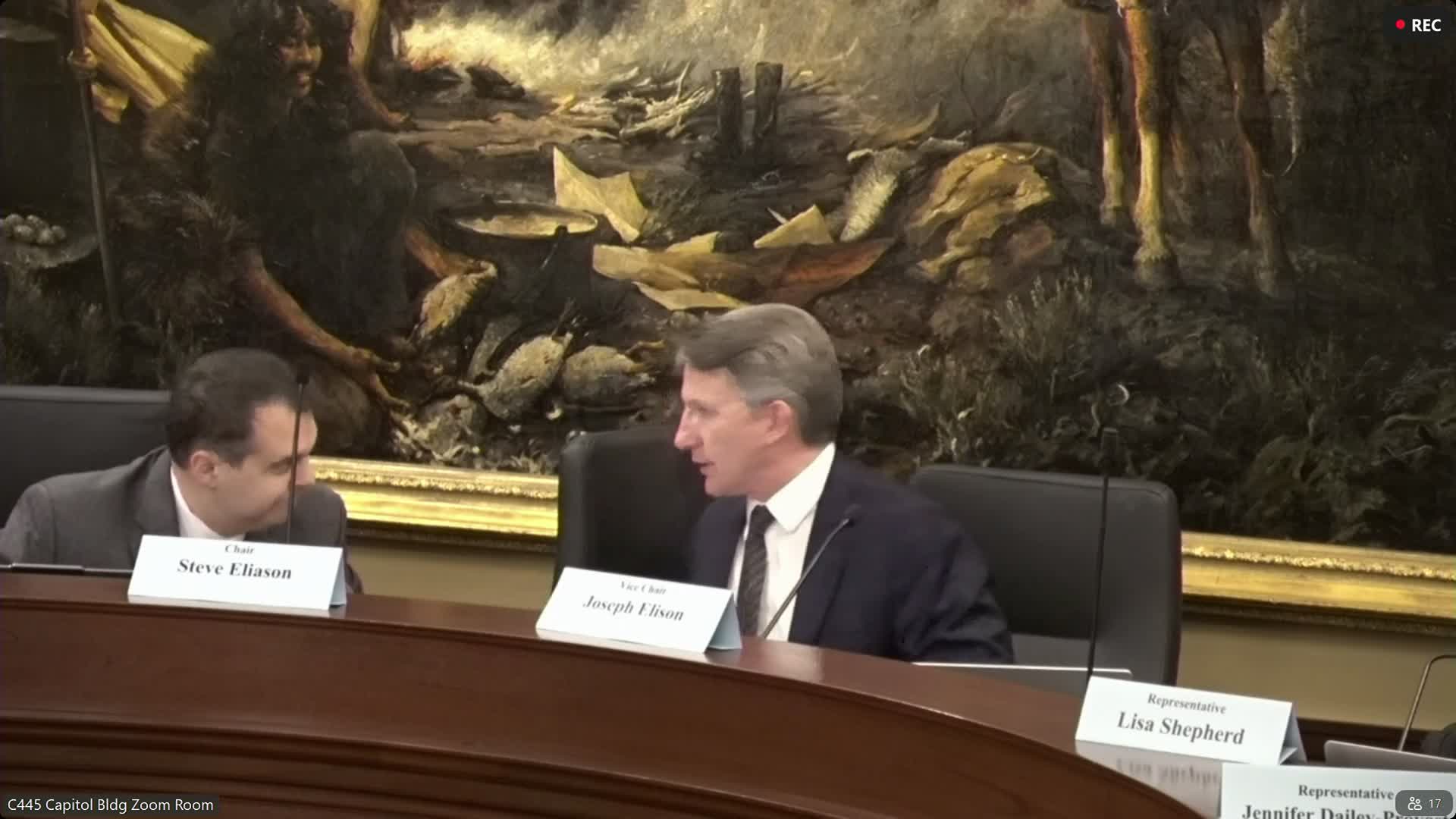
Summary
Representative Shelly's bill to tax and regulate carbon-credit sales drew lengthy testimony from state officials, rural and agricultural stakeholders and industry. The committee adopted Amendment 1 to the second substitute and then voted to 'hold' the bill to allow further stakeholder engagement and drafting changes.
Representative Shelly presented the second substitute to House Bill 185, a proposal that would create a mechanism for state oversight, a sliding assessment, and a state fund related to carbon-credit transactions. Shelly framed the measure as a transparency and defensive measure to protect state economic interests and public assets, saying the market for carbon credits is large and that states need visibility into transactions that could commit natural assets in perpetuity.
Shelly described a sliding assessment (5% for shorter-term commitments, 10% for over-ten-year commitments in the second substitute) and said a portion of proceeds would create a fund the attorney general could draw on to defend the state and departments in lawsuits related to environmental regulation or cap-and-trade programs. He said the bill would also create registration and reporting requirements for in-state sellers and a right of first refusal for the state in some circumstances.
State Treasurer Marlo Oakes testified in favor of increased transparency and tax treatment for out-of-state purchasers and told the committee HB 185 would bring transactions into public view so taxpayers can see how public resources are used. "When new financial structures emerge around natural resources, states need visibility early. Sunlight helps to prevent unintended consequences later," Oakes told the committee.
Multiple agricultural and rural stakeholders opposed the bill or urged changes. Kelly Pearson, Utah Commissioner of Agriculture, and representatives of the Utah Farm Bureau Federation, Utah Wool Growers Association, CWMU Association, county commissioners, and others warned the bill would impose new taxes and regulatory burdens on producers operating on thin margins, risk double taxation, create administrative delays via first-right procedures and registration requirements, and could imperil access to federal program funding for land-management projects. The Department of Natural Resources and Rocky Mountain Power also raised concerns about divergent funding streams and potential administrative burdens.
After public comment the committee considered an amendment. Representative Christofferson moved to adopt Amendment 1 to the second substitute; the sponsor accepted the change and the committee adopted the amendment by voice vote. Committee members then debated whether to hold or table the bill for further work; Representative Kristofferson moved to hold the bill to allow additional stakeholder engagement and interim work. The committee voted to hold HB 185 so stakeholders and the sponsor can continue negotiations and drafting.
What happens next: HB 185 (second substitute, with Amendment 1 adopted) is on hold. The sponsor indicated a willingness to work with stakeholders over the interim to address concerns about private-property impacts, federal funding implications, and administrative burdens; the committee will expect revised language or further clarification if the sponsor returns the bill to committee.