
Council adopts interim official control for Old Bellevue, directs permanent work via Downtown Livability 2
Get AI-powered insights, summaries, and transcripts
Sign Up Free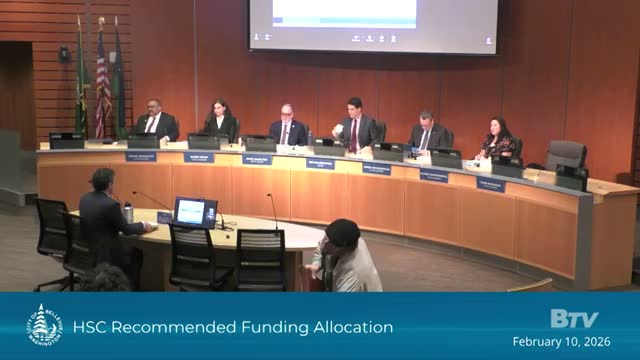
Summary
Bellevue approved a six‑month interim official control (IOC) to require preservation of key Old Bellevue facades and compatibility for new development on Main Street, and directed staff to address permanent regulations through the Downtown Livability 2 work plan; council debate highlighted tradeoffs between urgency, public process, and impacts on development costs.
Bellevue — The City Council voted on Feb. 17 to adopt an interim official control (IOC) covering a narrow stretch of Main Street in Old Bellevue that mandates preservation and compatibility measures for older storefront facades and pedestrian‑scale design.
Councilmember Jonathan Robinson moved to adopt the IOC, which staff described as a temporary, narrowly tailored measure that makes an existing incentive‑based façade preservation approach mandatory for projects submitted while the IOC is in effect. The IOC is effective for six months and requires a public hearing before council within 60 days.
Staff and council also discussed two options for permanent regulation: (A) include Old Bellevue in the Downtown Livability 2 code update (staff recommendation) or (B) launch a multiyear historic and cultural resources program that could establish local landmarking and preservation rules. Council directed staff to pursue option A, adding Old Bellevue to Downtown Livability 2 for a public, multi‑phase process to craft permanent code changes.
Supporters said the IOC preserves Old Bellevue’s human‑scale character while a more extensive public process proceeds. Councilmember Robinson said the IOC is intended to “pause” potential permit rushes and create time for community outreach with property owners, merchants and residents. Staff emphasized the IOC does not change baseline development capacity, does not apply to projects already approved or deemed complete, and intends to offer development incentives (bonus FAR/height) to offset preservation costs.
Opponents and some council members raised concerns about process and precedent. Several councilmembers said they wanted more public outreach and questioned whether the situation constituted the statutory urgency the IOC mechanism is intended for. Staff noted state law changes requiring owner consent for landmarking and said the IOC was drafted to be consistent with those constraints while relying on objective design standards.
The council passed the motion to adopt the IOC by voice vote and then voted to direct staff to address permanent Old Bellevue regulations through Downtown Livability 2. A separate motion to exclude Old Bellevue from the upcoming Housing Opportunities and Mixed‑Use Areas (Houma) code amendment was proposed and seconded and generated extended discussion; the transcript does not record a final council vote on that exclusion.
What’s next: The IOC requires a public hearing within 60 days and remains effective for six months unless extended. Staff will return with outreach plans and draft regulations under the Downtown Livability 2 work plan; council may revisit Houma‑related inclusion or exclusion when that item comes before them for formal action.