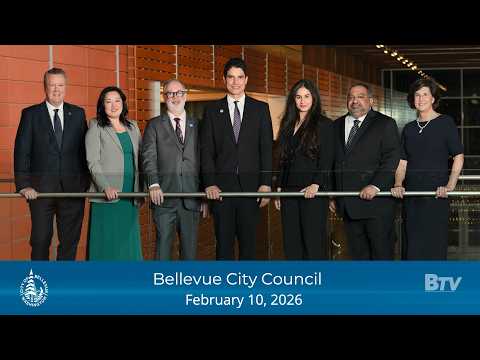
Bellevue council restores original wording for culturally specific services, adopts human‑services funding allocation
Loading...
Summary
After public comment and council debate, Bellevue voted to adopt the Human Services Commission’s recommended funding percentages for 2027–28 and amended the proposal to restore the commission’s original definition of “culturally and linguistically specific” programs—specifying services “designed for a particular linguistic or cultural community and delivered by individuals from that community.”
Bellevue — The City Council on February 17 adopted the Human Services Commission’s funding percentage recommendations for 2027–28 and amended the guidance to restore the commission’s original definition of “culturally and linguistically specific” services.
The council voted to approve Resolution 10,585 after an extended public comment period and council discussion about how to balance equity goals with the need for measurable program criteria. Deputy Mayor (name as recorded in the packet) moved an amendment that returned Attachment A to language adopted by the Human Services Commission, specifying programs “designed for a particular linguistic or cultural community and delivered by individuals from that community.” The amendment passed and the main motion passed by voice vote.
Advocates and providers spoke during public comments about the practical importance of representation in service delivery. Monique Martinez, a leader with For Tomorrow, urged the council to retain measurable standards and warned that a DAP‑derived phrasing would be “aspirational” and introduce subjectivity into funding decisions. Jerry Kron, executive director at Eastside Legal Assistance Program, said his organization had experienced funding cuts tied to language changes in previous cycles and argued clearer, inclusive language helps agencies demonstrate impact.
City staff described how the percentages were developed: they align with the Human Services Strategic Plan, the city’s comprehensive plan, and recent needs‑assessment data. Tony Esparza, assistant director in Parks and Community Services, told council the commission prioritized life‑safety and critical‑needs services, allocating just over half of the recommended funding to those areas while setting target percentages for youth programs and culturally and linguistically specific services.
Council members raised several practical questions during the debate: whether Bellevue has the provider capacity to meet a strict “delivered by individuals from that community” standard (staff said demand exceeds current capacity), and whether there is empirical evidence that matched‑background service providers produce better long‑term outcomes (staff said they had qualitative evidence and community testimony but do not track longitudinal outcomes). Several council members said restoring the commission’s language was important to remove barriers and build trust for historically underserved residents.
With the amended language adopted, staff will include the definition in the upcoming RFP for human‑services funding and provide application questions that ask agencies to describe the linguistic or cultural community served and how services are delivered. The council directed staff to proceed with implementation of the funding allocation and contingency recommendations as reflected in Attachments A and B of the resolution.
What’s next: City staff will include the adopted definition and allocation percentages in the RFP process and return to council with any policy or budget adjustments needed when specific funding decisions are proposed.