Get Full Government Meeting Transcripts, Videos, & Alerts Forever!
Get email alerts on the School Finance topic
No spam. Unsubscribe anytime.
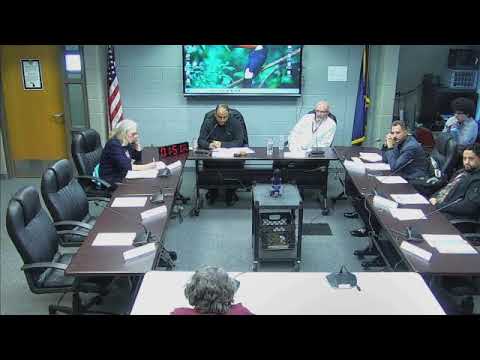
Hamtramck board approves request for advance of state aid amid questions over late audits and finances
Summary
The Hamtramck School District board unanimously approved a resolution asking the state for an advance on state aid after trustees pressed district finance staff about three years of late audits, changing grant totals and payroll variability. A public commenter accused the board of past decisions that worsened the district’s finances.
The Hamtramck School District board voted to request an advance of state aid after a lengthy discussion about delayed audits, fluctuating grant figures and how payroll and reimbursements were projected.
President Elgin introduced Resolution No. 1, a request that the district receive an advance of state aid payments, and trustees moved and seconded the measure; the board recorded a 4-0 vote in favor with three members absent. The resolution, as read at the meeting, authorizes the district to pursue state aid in advance to address short-term cash needs.
The vote followed extended questioning from trustees about the district’s financial controls and audit status. An unidentified trustee told the board, “I’m so mad,” and pressed leadership on why audits have been late for three consecutive years, asked for organizational charts and requested clearer staffing and accountability information. The trustee said the board’s principal responsibility is “to represent the best interest of the kids” and expressed alarm that the district had “popped up from nowhere” into a cash crisis.
District finance staff said many of the district’s grants are reimbursement-based and are received only after payroll or eligible expenses are processed. Staff stated auditors “have most of the information now” but noted remaining items — including fixed-asset records and attorney letters — that must be completed before the audit is finalized. Staff gave an estimated audit completion window (staff referenced a six-week working period and said they were aiming for late March) and said the district expects state aid to follow in early to mid-April, though staff emphasized the outcome is not guaranteed.
Trustees also questioned discrepancies in grant totals presented in different documents. One trustee noted a figure of $416,000 in an earlier document versus $316,000 in the version discussed at the meeting; district staff explained that reimbursements have been closer to the low-$300,000 range and that state reviewers asked the district to refine numbers and include items such as UAAL (unfunded accrued actuarial liability) retirement entries (staff cited roughly $3,000,000 related to retirement in-and-out entries), which affected totals.
On payroll, staff explained weekly variation reflects hourly employees, after-school stipends and planned large payments tied to union agreements (staff said they built in a roughly $500,000 union-related payment that creates a large single-week outflow). Trustees urged staff to identify purchases that could be deferred and to tighten controls on expenditures to avoid future emergency requests.
During the public comment period, an attendee criticized past board decisions, saying the situation “started 3 years ago” when the board voted not to authorize then-CFO Sherry Lynham to make investments on behalf of the district and later gave board members raises. The commenter also alleged recurring payments to "BRC Consulting" averaging $7,461 twice a month, estimating that pattern totals about $179,000 over 12 months, and asked what the board would do in response.
In response to the meeting’s discussion, President Elgin said the board and staff agreed to restore the check register to monthly board packets and to add a monthly finance report to future agendas. That change was presented as a corrective step intended to increase transparency and reduce the chance the district will again need emergency relief.
The board did not provide additional resolutions or actions beyond the vote to request the state aid advance; staff indicated they are continuing to work with auditors and the state to finalize numbers and obtain the requested funds.
Next steps: the district aims to complete the audit by late March and secure state aid in April; the board committed to monthly finance reporting and returning check registers to regular packet materials.