Get Full Government Meeting Transcripts, Videos, & Alerts Forever!
Get email alerts on the Ethics Investigation topic
No spam. Unsubscribe anytime.
Wyoming House votes to form investigative committee after reports of checks handed out on chamber floor
Summary
On Feb. 12, 2026, the Wyoming House voted to convene a seven-member investigative committee to examine allegations that checks were handed out on the House floor; the motion passed 59–0 with three excused after extended debate and two failed amendment attempts.
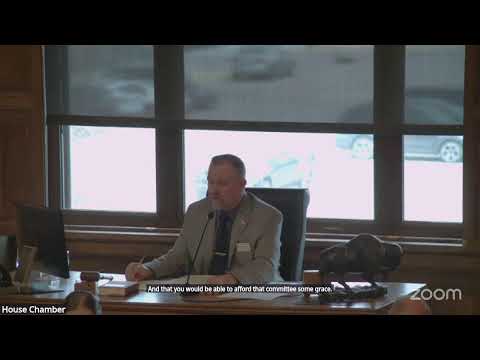
CHEYENNE — The Wyoming House of Representatives voted on Feb. 12 to convene a special investigative committee to examine allegations that checks were handed out to members on the House floor during the 2026 budget session.
Representative Provenza introduced the motion on the House floor, telling colleagues he moved “that the House of Representatives convene a special committee to investigate whether checks were provided to members of the House of Representatives on the floor of the House, and whether that action is a violation of the Wyoming state constitution under Article 3, Section 42 or Section 43, or constitutes legislative misconduct as defined in joint rule 22-1d.” The motion called for a seven-member committee appointed by the speaker, public hearings, the power to compel witnesses and documents, and a report back to the chamber within four legislative days of the committee’s convening.
Members from both parties debated the proposal for more than two hours. Supporters said a public inquiry was required to restore the institution’s credibility after media reports and photographs. Representative Byron argued the committee was “about us as a body representing the people back at home,” and Representative Wiley urged the House to “follow through with this process” to put the matter behind the body.
Other members raised procedural and legal cautions. Representative Knapp, drawing on management-audit experience, urged leadership to involve the Legislative Service Office and said, if criminal activity were suspected, the matter should be referred to the attorney general’s office rather than handled as a criminal inquiry by a political committee. Representative Knapp said the House is “not an investigative body” or a criminal court and warned against a knee-jerk response that could politicize the process.
Several members discussed due process for any members who could be implicated. Representative Lawley asked that those involved “have a right to speak for themselves,” and Representative Singh cautioned that the body should not “immediately assume the worst of our neighbors,” invoking constitutional protections and calling for careful review.
A named member who was discussed in coverage, Representative McCamp, told the chamber: “I did nothing wrong,” while acknowledging the optics were poor and saying he would accept the committee’s findings.
While the chamber briefly tabled the motion to noon to allow drafting of proposed amendments, two amendment efforts failed when put to the body. Representative Singh’s amendment would have expanded the committee’s purview to include potential revisions to the Wyoming Public Records Act; Singh framed that change as a way to make investigatory information more available to the public. That amendment was defeated following debate and a division. A second amendment, offered by Representative Rodriguez Williams to clarify whether any alleged handing out of checks occurred “while the legislature was in session” and whether there was a security breach, was also defeated.
After returning to the main question, the House recorded a roll call and adopted Provenza’s motion; the chief clerk announced the final tally as 59 aye and three excused. The speaker pledged to appoint a balanced committee and to run the process “fair and impartial,” noting the committee would be expected to issue a report under the timeline set in the motion.
What the committee will investigate remains what the motion defined: whether checks were distributed on the floor of the House, whether such conduct violated constitutional provisions (as cited in the motion) or house rules, and whether legislative misconduct occurred. The new committee has powers specified in the adopted motion, including public hearings, subpoena authority as authorized by Wyoming statutes cited in the motion, and a requirement to report back to the chamber promptly.
Next steps: the speaker will appoint committee members as provided in the adopted motion; the committee is to convene and complete its work within the timeframe set by the motion and to report its findings and final recommendation to the House of Representatives.