Get Full Government Meeting Transcripts, Videos, & Alerts Forever!
Get email alerts on the Site Plan Regulations topic
No spam. Unsubscribe anytime.
Swanzey Planning Board votes to keep one-year site-plan approval, orders rewrite of regulations
Summary
After a lengthy line-by-line review, the board rejected a proposal to switch to two-year approvals and voted to keep the existing one-year approval period for site-plan permits; staff will consolidate edits and present a fresh draft of the site-plan review regulations.
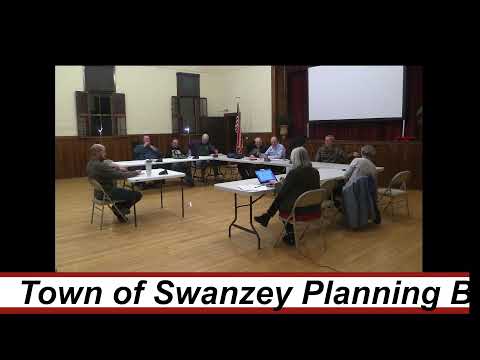
The Swanzey Planning Board spent the bulk of its Feb. 12 meeting reviewing proposed changes to the town’s site-plan review regulations, including clarifying three approval categories (approval without conditions, approval with conditions, and conditional approval), definitions of active and substantial development, and the period for which approvals remain valid.
A majority of members argued for retaining the current one-year expiration for site-plan approvals. Mark Scalera moved to keep the one-year period, Richard Lane seconded, and after members debated financing and timing considerations for larger projects the motion passed to retain one year rather than extend to two. Supporters of a longer term said two years provides breathing room for complex projects to secure financing and permits; opponents cited limited recent use of extensions and the town’s upcoming zoning audit as reasons to keep the status quo.
Board members also debated substantive drafting points the board asked staff to address in a consolidated rewrite: move the public compliance-hearing requirement into the 'approval with conditions' section; define which items constitute "active and substantial development" (site prep, erosion control, drainage/utilities, foundations/footings, roadways) while preserving planning-board discretion; clarify that erosion-control measures alone do not by themselves satisfy substantial-development requirements; reduce redundant 'effective' language tying approvals to plat signatures; and change the number of required signed copies from three to two for town records.
Adam, planning staff, agreed to incorporate the edits and produce a consolidated draft of the revised site-plan review regulations for future review by the board.