Hennepin County board adopts resolution documenting Operation Metro Search and reaffirming contracting authority
Loading...
Summary
The board adopted a detailed resolution (R1) documenting facts about Operation Metro Search, reaffirming support for existing sheriff policy while urging notification of substantive changes, and clarifying that only the county board may approve agreements such as Section 287(g) or federal Basic Ordering Agreements (BOAs).
The Hennepin County Board on Feb. 12 approved an R1 amendment and adopted a resolution that (1) documents recent developments around the federal immigration enforcement operation known as Operation Metro Search, (2) reaffirms the board's oath to the U.S. Constitution and existing county policies, and (3) clarifies contracting authority for cooperative agreements with the federal government.
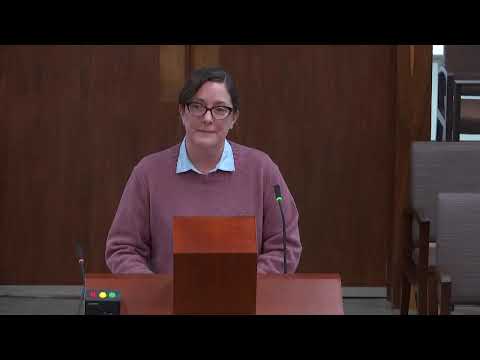
Chair Irene Fernando read aloud the R1 changes that had been circulated to commissioners during the meeting and said the board intended to record as factual what had been publicly stated about a federal drawdown of agents and about the absence of a county‑approved Section 287(g) agreement or a BOA. The resolution cites Minnesota statutes regarding county contracting authority and references an opinion of the Minnesota Attorney General's office that, as the resolution states, "sheriff's powers are defined by state law and do not include the ability to enter cooperative agreements with the federal government" without board approval.
The board's resolving clauses reaffirmed support for the sheriff's existing policy on federal immigration enforcement, urged the sheriff not to make substantive changes that would increase cooperation with federal immigration enforcement without notice, and asked federal agencies to refrain from civil immigration enforcement actions in or near courthouses and county facilities.
Commissioner Adelson moved and colleagues read and discussed the edits in detail; county counsel recommended reading the changes into the public record for transparency. After discussion the board approved the R1 resolution by voice vote.
What happens next: The resolution becomes a formal record of the board's stated positions and requests; it also directs staff and county stakeholders to continue monitoring operations and to provide transparency around any substantive policy changes.
Key quote: "This is not new direction or new policy. This is the existing understanding as I understand it regarding the board's operational desires," Chair Fernando said while introducing the amendment.