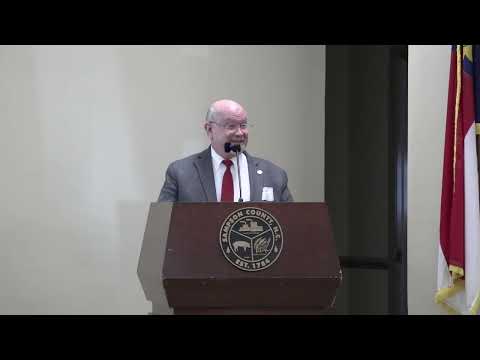
Sampson 360 launch draws county leaders; keynote urges workforce, infrastructure and energy focus
Loading...
Summary
At the inaugural Sampson 360 event, county officials, business leaders and residents heard a keynote from Ted Abernathy urging alignment of stakeholders, investment in workforce and site readiness, and faster infrastructure—especially energy—to attract investment to Sampson County.
Sampson County convened local elected officials, business representatives and residents at the inaugural Sampson 360 event to launch a countywide economic-development initiative aimed at coordinating workforce, infrastructure and business-growth activities.
The keynote speaker, Ted Abernathy, managing partner of Economic Leadership LLC, told attendees that local competitiveness will hinge on workforce availability, site readiness and reliable utilities. "The secret to your success here is pretty simple. You have to align your stakeholders," Abernathy said, urging sustained planning and coordinated action rather than short-term fixes.
Abernathy framed his remarks with national and state trends that will affect Sampson County. He summarized divergent GDP forecasts and said a mid‑2 percent growth rate was a reasonable expectation, while job growth has flattened. He cited local indicators showing "green shoots" in manufacturing and logistics but emphasized that workforce constraints and demographic trends — including lower birth rates and limited in‑migration without targeted efforts — will shape the county's labor supply.
Why it matters: Sampson 360 is intended to be a persistent forum for leaders from government, agribusiness, education, health care and nonprofits to coordinate actions that can improve job quality, attract investment and expand the tax base that funds schools and services.
Key takeaways from the keynote and discussion:
- Workforce and education: Abernathy urged investing in career pathways, apprenticeships and programs that help students transition from school to work. He noted an ongoing gap in degree completion and urged efforts to help residents finish postsecondary credentials.
- Site readiness and permitting: Site selectors, he said, rank utilities, permitting speed and certainty among their top factors when choosing locations. "If you don't have those three things, you're not in the game at all," he said, calling for development capacity plans and coordinated water/sewer investments.
- Energy capacity: Abernathy urged local leaders to be open to energy projects that increase capacity, saying data centers and advanced industry increasingly require dedicated, reliable power. He recommended approving projects that improve the county's ability to serve large electricity users.
- Housing and tax base: He pointed out that Sampson County's lower housing values limit the local tax base even as modest recent increases present growth opportunities; leaders should weigh affordability against the need to grow revenue for schools and services.
- Entrepreneurship and technology: The keynote observed that entrepreneurship grew during the pandemic and that automation and AI will change many job tasks over the next decade. Abernathy advised planning for upskilling and flexible training programs.
Audience members raised questions about growth strategy and land use. One resident said parts of the county face crime and large agricultural holdings that require careful planning; Abernathy replied that communities must choose whether to pursue growth and, if so, adopt long‑range plans with capacity triggers and coordinated capital investments.
Organizers closed by encouraging participation in future Sampson 360 events and by stressing that the initiative is meant to turn insights into ongoing action to strengthen the county's economy.
The Sampson 360 organizers said they will continue the series with seminars and programs designed around the priorities identified during the inaugural meeting.