Committee forwards Colfax Corner financing tied to new Innovation Development District
Loading...
Summary
A South Bend committee voted to send an ordinance authorizing taxable development notes for the Colfax Corner project to the Committee of the Whole with a favorable recommendation after staff described a financing structure using a newly created Innovation Development District (IDD). The measure drew both business support and public concern about transparency in the IDD agreement.
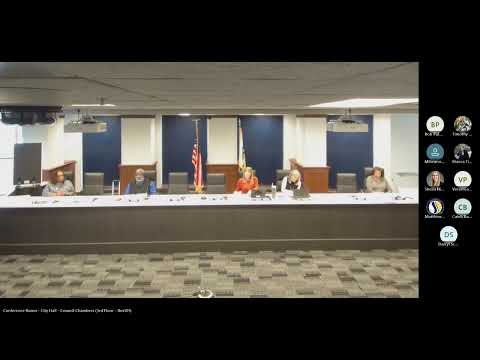
Caleb Bauer, executive director of the Office of Community Investment, told the Community Investment Committee on Feb. 9 that the ordinance before the council would authorize up to $30,800,000 in taxable development notes to help finance the Colfax Corner redevelopment in downtown South Bend. Bauer said the project would be supported by an Innovation Development District — a state-authorized tool that allows the city to retain incremental state income and sales tax, in addition to property tax increment, to support project debt service.
Bauer said the state agreement governing IDD remittances includes an annual cap of $15,000,000 in state sales and income tax increment and a $225,000,000 maximum contribution over the district’s 30-year term. He said the Colfax Corner project is expected to redevelop the former Tribune building and add roughly 200,000 square feet of space, with a total project investment of about $154,000,000 and estimated direct economic impact of more than $750,000,000 over 10 years. "This is a scalable market-driven solution that will remit a couple forms of state tax increment back into the control of the city of South Bend," Bauer said.
Bethany Hartley, president and CEO of the South Bend Elkhart Regional Partnership, spoke in support, saying the project would co-locate university research, workforce development and industry and strengthen downtown’s talent pipeline. "Colfax Corner positions South Bend and the broader region to compete for the next generation of jobs, companies, and investments," Hartley said.
William Elliott Smith, an attorney speaking in opposition, urged the committee to postpone the ordinance, saying council members had not been shown the full IDD agreement with the state economic development authority. Smith cited Indiana Code 36-7-32.5 and warned that, in other jurisdictions, IDD-like agreements had diverted substantial local revenue and given outside entities discretion over funds. "Without full disclosure, you cannot meaningfully exercise oversight," Smith said, citing Lebanon, Indiana, as an example.
Bauer said the IDD agreement is a public record and staff would process records requests, but added that state statute frames the IDD agreement as a contract principally between the executive branch and the Indiana Economic Development Corporation. He also said issuing notes of this type requires council authorization and that the redevelopment commission would govern future appropriations of IDD revenues.
After the presentations, a motion to send Bill 05-26 to the Committee of the Whole with a favorable recommendation carried on a committee voice/roll call (four ayes recorded). The committee’s action means the ordinance will be considered by the full council at a subsequent meeting; Bauer noted the redevelopment commission is next in the approval process and bond issuance would occur months later if finalized.
What happens next: the redevelopment commission will consider the proposal later in the week and, if that body approves, staff will move toward bond issuance and closing consistent with the not-to-exceed authorization the council forwarded. The IDD designation and new base rates were noted to begin March 15, 2026, in staff remarks.