Residents press Goshen board to tighten rules after contested 10‑MW Millburn Road solar proposal
Loading...
Summary
At a Feb. 12 Town Board meeting, residents and board members debated whether to tighten local zoning and battery-storage rules after developers proposed a 10‑megawatt project split into two 5‑MW arrays. Speakers warned of watershed risks, fire and hazardous‑materials concerns and urged an independent environmental review or a moratorium until regulations are updated.
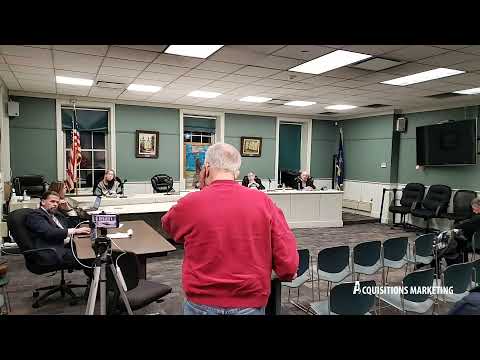
Local residents and the Town of Goshen Town Board on Feb. 12 continued a months‑long review of ground‑mounted solar and battery storage, centering on a proposed project on Millburn Road that applicants structured as two 5‑megawatt arrays to qualify for NYSERDA incentives.
Supervisor introduced the issue as part of a broader post‑moratorium review of solar and energy‑storage applications, saying the town must address “circumvention of the megawatt capacity” where applicants subdivide parcels to effectively create larger arrays. Board members debated whether the town can regulate projects above 5 MW and how to respond where state incentives create a local zoning loophole.
Public commenters and technical speakers urged the board to require additional study before approving variances or permitting construction. Paul Camerarri, a resident, asked the board to “only approve projects that are fully commensurate with our comprehensive plan” and urged reopening environmental review for the Millburn Road site. Marcia Matthews, who said she managed water for the village in the past, warned the project would “expose the village of Goshen’s water supply,” and asked the board to weigh the watershed and supply risks carefully.
Engineer and resident James Cayciano presented a handout pointing to studies he said were omitted from the applicants’ package and warned that solar panels and battery systems contain hazardous materials. He flagged the risk that panel or battery failure could release contaminants and said an independent environmental impact statement should evaluate water, socioeconomics and public‑safety consequences.
Board members discussed zoning responses short of a full ban: tighter buffers and setbacks, distance requirements between facilities, limits on internal lot‑line subdividing to secure multiple incentives, clearer variance standards, and better coordination with the zoning board of appeals. Several members said the town has limited control once state review thresholds are met and recommended legal research and more technical analysis before any code changes.
The board did not adopt new rules at the meeting. Members agreed to gather more data, consult the planning and zoning boards, obtain peer reviews and return with recommended statutory language at a future meeting. The solar and battery storage item was tabled to the next meeting for follow‑up.