Get Full Government Meeting Transcripts, Videos, & Alerts Forever!
Get email alerts on the City Finance topic
No spam. Unsubscribe anytime.
Mayor Mueller details city finances, warns of rate pressures and sea‑1 uncertainty
Summary
Mayor James Mueller presented the city's 2025 financial update, reporting a $19.3 million spend‑down in operational funds (partly one‑time), $771.6 million in net capital assets, and plans to balance essential water, sewer and PFAS costs while minimizing rate impacts on residents.
Mayor James Mueller told the Common Council on Jan. 26 that the city remains in a strong fiscal position but faces near‑term pressures that will require difficult choices. "We have a double A bond rating," Mueller said, but added the city must "work hard to maintain it" while addressing infrastructure needs and state policy changes that could affect revenues.
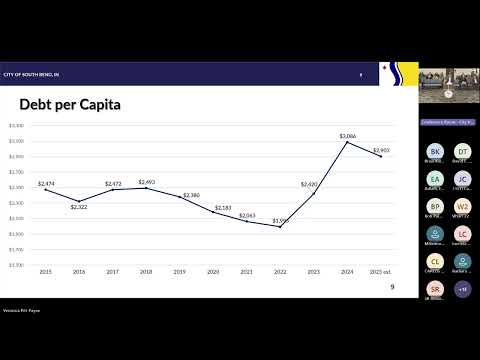
Mueller said the city's total net book value of capital assets for 2025 is $771,600,000 (net of depreciation) and reported $29,000,000 in capital expenditures in 2025. He attributed a visible 2024 cash increase to bond proceeds issued for large projects — including a $45,000,000 bond for the Winfield project and financing for the Madison Lifestyle District garage — and said those proceeds were followed by project spending in 2025.
On operations, the mayor reported a combined deficit of $19,300,000 in the general‑plus operational funds for 2025. He said roughly $9,000,000 of that amount was a one‑time general‑fund appropriation used to complete the Rackland Murphy Encore Center, with repayment to the general fund expected beginning in 2027. Mueller also noted that the waterworks fund shows an apparent surplus because PFAS‑settlement dollars have been received but not yet fully spent.
Mueller flagged implementation of Indiana Senate Enrolled Act 1 as a revenue risk the administration is tracking and said local income tax supplemental distributions were weaker last year. He emphasized that essential services — clean drinking water, trash pickup and sewer investments — will be priorities in any rate discussions. "We're trying to minimize the rate increases as much as possible," he said, while acknowledging that federal and state mandates could require additional local funding.
Council members asked about communicating rate changes to residents, and about strategies to preserve the AA bond rating. Mueller said the administration will seek growth and targeted investments rather than accumulating excessive cash reserves, and reiterated the city's long‑term approach of using debt financing to smooth costs for large projects.
The mayor closed by identifying public safety, neighborhood infrastructure and continued investment as the administration's most important goals for 2026.