
Senate committee reviews bill to limit federal scholarship tax-credit list to nonprofits serving low‑income students
Get AI-powered insights, summaries, and transcripts
Subscribe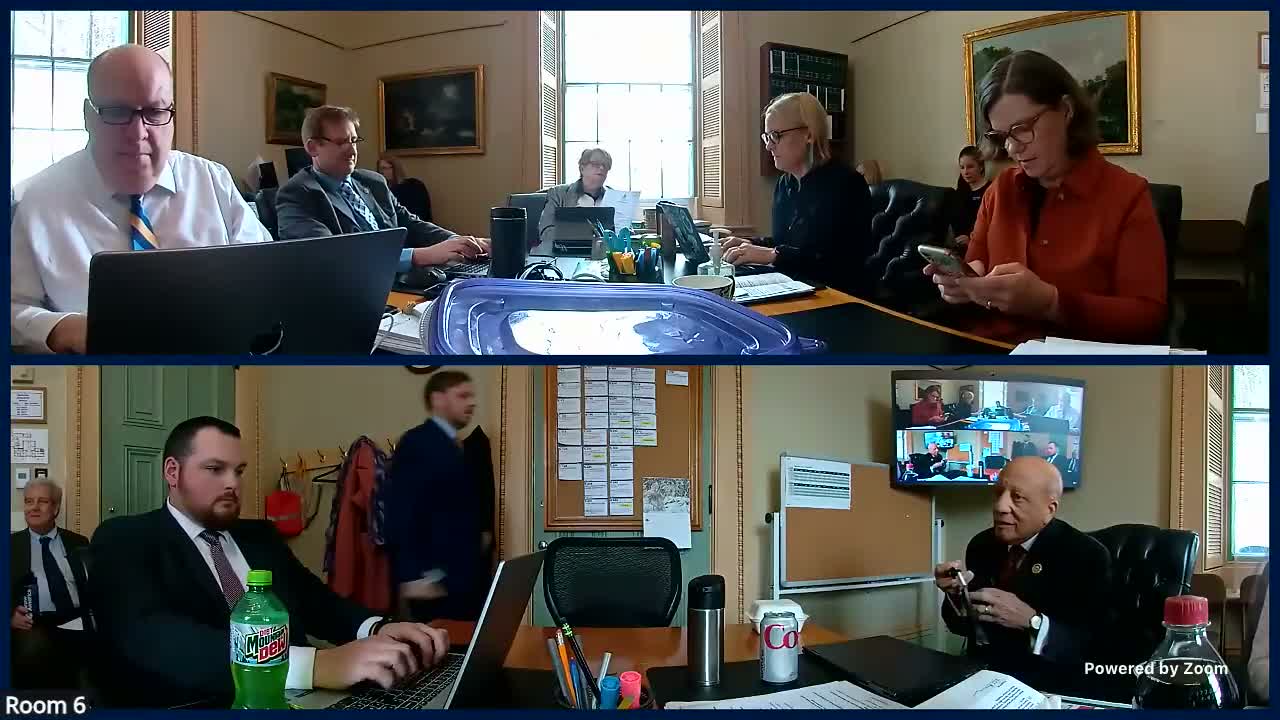
Summary
A Senate committee walked through S.161, which would direct the governor to publish a list of scholarship‑granting organizations (SGOs) narrowly focused on after‑school, summer and tutoring programs for low‑income students so Vermont taxpayers can claim a new federal tax credit. Staff flagged uncertainty pending IRS regulations and said Vermont could opt out if federal rules diverge.
At a committee meeting, members examined S.161, a bill that would authorize the governor to provide a list of scholarship‑granting organizations that Vermont taxpayers could use under a new federal income tax credit.
The bill sponsor described the effort as an attempt to "take a provision that allows for the creation of nonprofit organizations whose purpose is to give scholarships" and to narrow it so listed organizations would have a core mission "of providing educational opportunities to economically underprivileged students through after‑school programs, summer programs, tutoring, and similar programs." The sponsor said the narrowing is designed to focus assistance on lower‑income students and to make potential donor appeals clearer.
Kirby Eaton, a staff member who walked the committee through the federal law, said the credit (created by HR 1) is a federal income tax credit that will allow eligible taxpayers to receive up to $1,700. Eaton said Vermont's role would be to identify which scholarship‑granting organizations qualify for inclusion on a list to be sent to the U.S. Treasury, and that the state could further restrict which organizations it recognizes.
Eaton summarized federal SGO requirements the state must respect if it participates: an SGO must be a 501(c)(3) (not a private foundation); must provide scholarships to 10 or more students who do not all attend the same school; must spend at least 90% of its income on scholarships for eligible students; and must maintain separate accounts so qualified contributions are not commingled. Eaton also emphasized that qualified contributions must be cash.
Committee members pressed staff on how narrowly Vermont could define eligible organizations and on the bill's phrase "capable of receiving public tuition." Some members asked whether the proposed language would exclude religious schools or conflict with federal law. Eaton said the state can narrow which SGOs it lists, but noted there is an open legal and administrative question because IRS regulations to define allowable expenses had not yet been issued. Eaton told the committee, "there's clarity that's on the way, but it's not out yet."
S.161 as drafted would add an executive‑title section authorizing the governor or designee to list organizations that satisfy the section's criteria, permit an annual presumption that organizations listed in the prior year will remain listed unless they fail requirements, and give the governor audit authority. Eaton told the committee the state effective date in the amendment is July 1, 2026; the federal program is expected to take effect Jan. 1, 2027, meaning contributions in 2027 would be claimed on later tax filings.
The committee did not take a vote. Members asked staff for specific links and source documents (for example, the Cornell Law or federal citations Eaton referenced), and the chair said the panel would return to S.161 for further word‑by‑word review once federal guidance and staff analyses are available.
What happened next: The committee paused S.161 and moved on to a separate agenda item (S.220). The committee indicated it will revisit S.161 after IRS guidance and additional legal review are available.