
Senate committee advances Granite State Home Mitigation and Resiliency Program to help homeowners pay for storm-proofing
Get AI-powered insights, summaries, and transcripts
Subscribe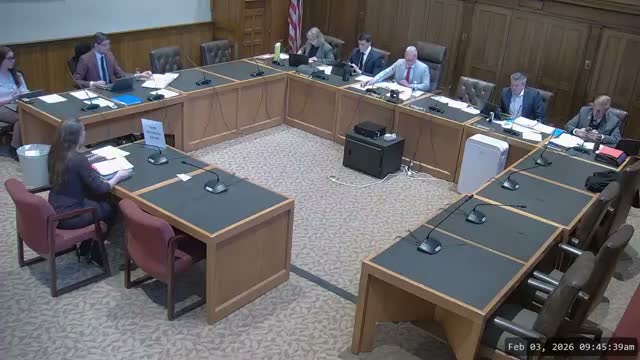
Summary
The committee advanced SB 562, which would create a grant fund to help New Hampshire homeowners pay for mitigation projects — grants cited at up to $9,500 — intended to improve insurability and reduce claims by fortifying homes against severe weather.
A Senate committee voted to advance SB 562, the Granite State Home Mitigation and Resiliency Program, after hearing testimony from the Insurance Department and stakeholders about rising homeowner insurance costs and growing climate-related risks. Nicole O’Brien, speaking for the Senate president’s office, summarized the bill as a grant program “to provide grants of up to $9,500 to New Hampshire resident homeowners for projects that will enhance their home's resiliency during severe weather.”
The bill would establish a grant fund and eligibility criteria for projects that make homes and properties more resilient — for example, roof or foundation repairs and removal of hazardous trees — with the stated aim of improving insurability and lowering premiums over time. DJ Bettencourt, commissioner of the New Hampshire Insurance Department, told the committee the fund is intended to be proactive: homeowners would not need to wait until they’re denied coverage to apply. “The hope is … people will take these steps before they find themselves in that situation,” he said.
Supporters pointed to programs in other states as precedent. Bettencourt cited Alabama’s experience, saying thousands of homes had been fortified and thousands of grants issued in recent years, and he said states that have adopted similar programs reported fewer claims and lower premiums for proactive homeowners. The Insurance Department told lawmakers it modeled scenarios with modest initial funding — roughly $3–5 million — and envisioned caps on individual grants (the department discussed a $10,000 cap in modeling) and limits on frequency of awards for a single household.
The department also discussed funding approaches that avoid an immediate state appropriation, saying it has explored philanthropic partnerships and regional federal-bank investment opportunities to seed a sustainable revenue stream. Bettencourt said the department prefers establishing the program now so it can begin quickly if funds become available: “when those dollars become available, We have the program in place, and we are ready to hit the ground running.”
Committee members asked for clarification on whether discounts would be mandated for insurers and on program scale. The department said it did not mandate insurer discounts, but noted some carriers already offer fortified-home discounts; it also described means-testing and a model intended to target households most in need. After questions, the committee voted in executive session to report the bill out with consent.
Next steps: SB 562 was reported out of committee by voice consent; the bill will be placed on the Senate calendar for further consideration and potential floor action.