Get Full Government Meeting Transcripts, Videos, & Alerts Forever!
Get email alerts on the Land Use topic
No spam. Unsubscribe anytime.
Zoning board approves parking variance for 250 Turnpike Road; bridge must be removed or repaired within two years
Summary
The Southborough Zoning Board of Appeals approved a variance allowing a self-storage facility at 250 Turnpike Road to operate with 16 upper-lot parking spaces rather than the bylaw-calculated 36, subject to conditions including a two-year deadline to repair or remove a pedestrian bridge and signage banning Route 9 parking.
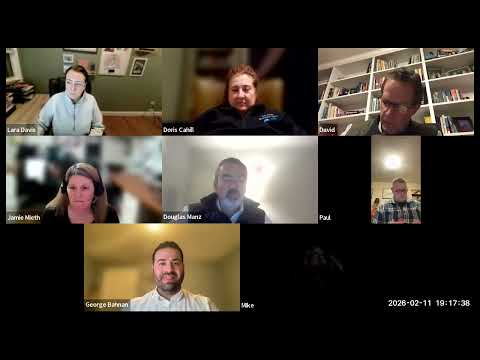
The Southborough Zoning Board of Appeals voted Feb. 11 to grant a variance allowing FD 250 Turnpike LLC to operate a self-storage facility at 250 Turnpike Road with 16 existing upper-lot parking spaces instead of the 36 required under town zoning, provided the owner meets conditions intended to prevent spillover parking and address a deteriorating pedestrian bridge.
George Bonham, representing the applicant, told the board the facility is about 85% occupied and that the pedestrian bridge connecting the upper and lower lots has been closed for months without producing recurring overflow or unsafe parking on Route 9. "We have several months of operation with the bridge closed and no parking issues, at about 85% occupancy," Bonham said, asking the board to rely on operational evidence rather than the bylaw formula alone.
The board’s action included three conditions: the pedestrian bridge must be repaired or demolished within two years (subject to necessary Board of Health and Conservation Commission approvals), signs must be posted prohibiting parking on Route 9, and the variance is limited to the site’s current self-storage use. The motion to approve the variance passed by roll-call vote with members recording "Aye": Doris; Jamie; Mike; Paul; Doug; and Williams.
Board members said they were sympathetic to the applicant’s cost concerns but wanted to avoid leaving the bridge as an ongoing eyesore or environmental hazard. Several members flagged the standard for a zoning hardship and said they were uncomfortable with a variance that could enable a different, higher-parking use without further review. Jamie pressed whether the bridge’s deterioration was "self-created" because the owners had held the property as it aged; Bonham responded that the structure was decades old and that the owners took responsible measures to close it when it became unsafe.
To address future-change risk, the board limited the variance to the self-storage use; any change of use would require the owner to return to the Zoning Board. Board members also discussed but did not adopt an explicit numerical cap on small accessory activities in the building’s conference space; instead, they agreed on posting and an approach focused on accessory-activity restrictions and signage to discourage Route 9 parking.
The board also required the applicant to return for an update if the bridge removal or repair plan is not advanced within the agreed timeframe. Bonham told the board he expects septic permitting and related steps to take about a year and supported a two-year window for the bridge decision. "If the bridge is not taken down in a reasonable timeframe, the applicant must return to provide an update," a board member summarized during the motion.
The board closed the public hearing on the matter and then voted to approve the variance with the conditions. The public-hearing process on related 40B plans will continue at future meetings.
The next step for the applicant is to coordinate required permits with the Board of Health and Conservation Commission and, as needed, return to the Zoning Board for status updates if timelines slip.