Get Full Government Meeting Transcripts, Videos, & Alerts Forever!
Get email alerts on the Public Safety Overview topic
No spam. Unsubscribe anytime.
Missoula public safety leaders review 2025 stats, staffing gaps and cautious tech plans
Summary
Missoula County Sheriff Jeremiah Peterson, Missoula Police Chief Mike Collier and Fire Chief Lonnie Rasch outlined 2025 call volumes, staffing shortfalls, mobile behavioral-health response expansion and plans to introduce technology improvements — excluding facial recognition — with community input.
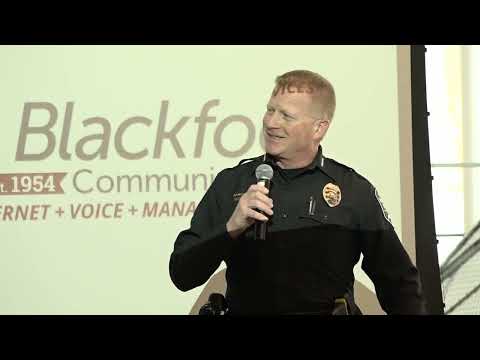
Missoula County Sheriff Jeremiah Peterson, Missoula Police Chief Mike Collier and Missoula Fire Chief Lonnie Rasch summarized 2025 operations and sketched priorities for 2026 at a City Club Missoula forum on frontline public safety.
Sheriff Jeremiah Peterson said the sheriff’s office comprises about 60 sworn deputies, 122 detention officers and roughly 25 civilian staff — “a little over 200 employees” — and that patrol deputies handled about 27,000 calls for service last year, roughly 4,500 more than the prior year. He said the county’s detention facility on Mullen Road (capacity cited in the forum) booked about 4,300 people last year and the coroner’s office handled roughly 367 calls. Peterson said the office is focusing its 2026 strategic plan on controlling street crime, professional development and department efficiency, and noted recruitment gains that have expanded the hiring pipeline.
Chief Mike Collier described MPD’s incident volumes and staffing. He said Missoula’s total incidents have sat around 55,000–56,000 annually, with violent crime up about 1.5 percent driven largely by a roughly 5 percent increase in aggravated assaults. Traffic crashes and DUI incidents were lower year to year; Collier reported 421 DUIs in the most recent year versus 454 the year before. He said the department is authorized for 118 full‑time officers but is currently down by about eight, and that hiring remains constrained by academy and field‑training timelines that can take about 10 months from conditional offer to full deployment.
On technology and privacy, Collier said the department will not pursue facial‑recognition systems — “facial recognition is not one of the technologies I’m interested in” — because the state heavily regulates that tool. He did say some AI‑enabled video search tools and license‑plate readers can be efficient “force multipliers,” and emphasized any new public‑facing technology would be brought to the community for a robust conversation about privacy and oversight.
Panelists described interagency federal partnerships used in complex investigations. Collier and Peterson noted Missoula participates in multi‑agency efforts, including a High Intensity Drug Trafficking Area (HIDTA) task force, and that they honor lawful federal warrants. Both emphasized that local agencies do not perform immigration enforcement absent deputization or formal federal agreement.
Speakers highlighted behavioral‑health response as a major focus. Police and fire officials credited the mobile support team with reducing patrol burdens and improving service to people in crisis; Chiefs said they are tracking metrics such as repeat contacts and handoffs and are exploring expanded hours of operation.
The forum drew questions about officer wellness programs. Panelists cited employee assistance programs, internal peer‑support and chaplaincy services, and a national 911atEase option for 24/7 counseling. Officials acknowledged stigma remains a barrier but said efforts to normalize help are underway.
The panel closed by stressing community engagement before deploying any new technology and by noting recruitment and retention remain central to near‑term plans.
The forum concluded with a reminder that City Club recordings are available through Missoula Community Access Television and registration information for upcoming sessions.