
University outlines AI Hub to centralize education, research and workforce training
Get AI-powered insights, summaries, and transcripts
Subscribe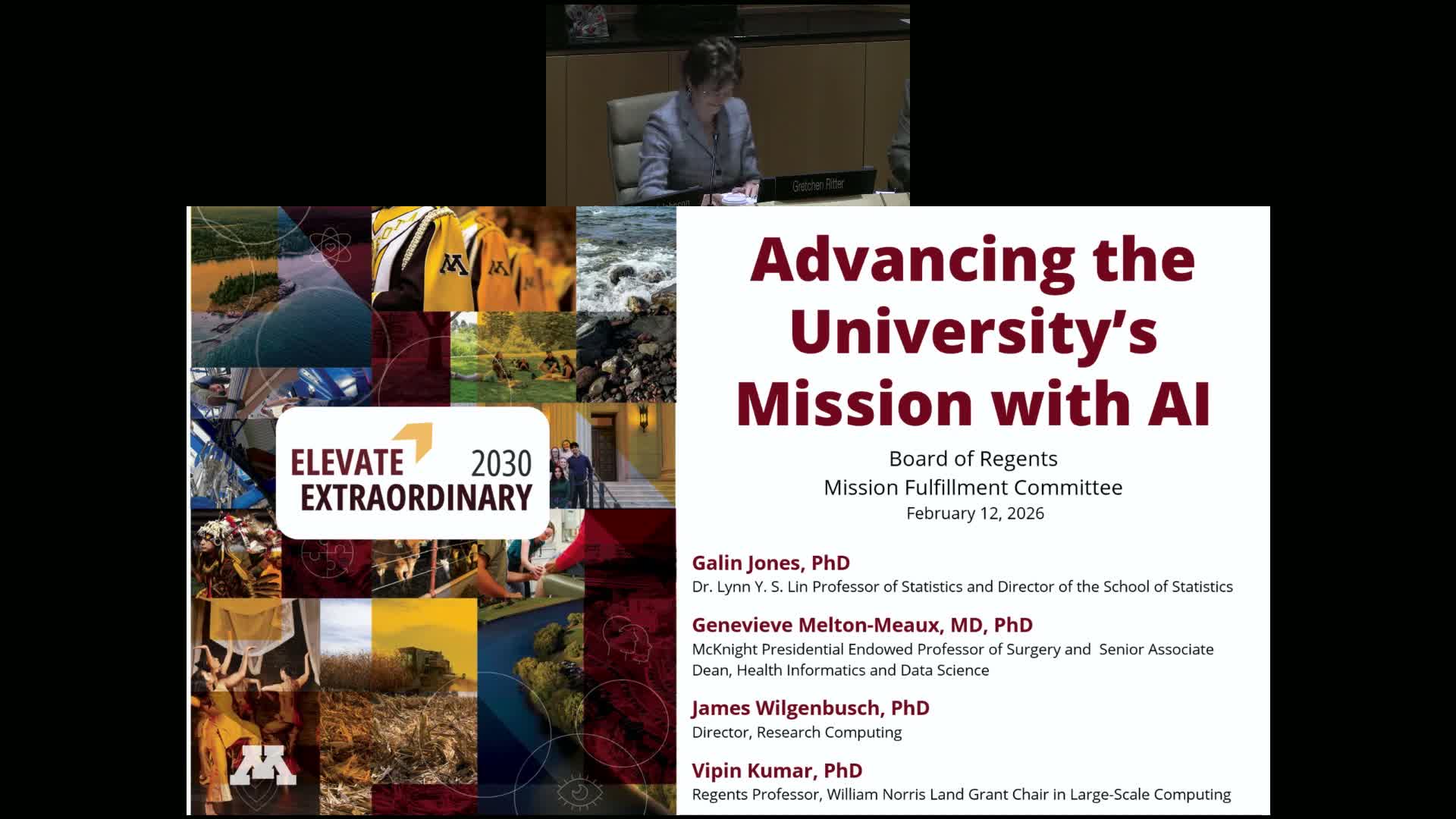
Summary
University leaders proposed an AI Hub to coordinate education, interdisciplinary research and operations; presenters emphasized ethical AI, workforce upskilling with industry partners, and investments in governance and infrastructure.
Professor Galen Jones and colleagues presented a plan to develop an AI Hub that will coordinate education, interdisciplinary research and operational support across the University of Minnesota system.
"We aim to make the university a center of excellence in AI teaching and learning, a top destination for AI research and development across disciplines, and to invest in university operations to attract, develop, and retain a skilled university workforce," Jones said. He cited the university's computing history, large academic datasets, and interdisciplinary strengths as foundations for the initiative.
The presenters described three pillars for the AI Hub: education, research, and administration and operations. Genevieve Melton Moakes, who framed ethical and responsible AI as a cross-cutting requirement, said the Hub will embed equity, bias mitigation, accessibility, and human oversight into curriculum, technologies and governance.
Early actions cited by the panel include university AI makerspaces open to faculty and staff, an AI upskilling program launched in late 2025 in partnership with Honeywell, Philips and Mayo via a DEED grant, and a data science/AI summer camp targeting high school students. Jones and colleagues said the Hub will also convene industry and government partners to expand workforce training and research partnerships.
Regents asked whether the Hub's plans include frontline practitioners and how training will be deployed across staff levels. Regent Turner raised concerns about the need to engage entry-level workers and nurses in AI design and implementation. Presenters responded that training is being developed for entry-level to technical staff and highlighted existing partnerships in health care that include clinician engagement.
On risk and sustainability, Representative Isabella Peterson asked about the possibility of an AI 'bubble' and the environmental impact of AI. Panelists said they expect some industry consolidation but not the disappearance of AI applications, and they pointed to ongoing research to reduce the environmental footprint of AI computing.
Presenters emphasized the need for coordinated governance, compliant infrastructure, and external partnerships, and said the Hub will act as a "front door" for AI activities at the university while promoting responsible use and community engagement.