Lifetime Citizen Portal Access — AI Briefings, Alerts & Unlimited Follows
Committee advances residency and occupancy changes for first‑time buyer assistance; lenders warn of unintended effects
Loading...
Summary
HB 2667 advanced with discussion after sponsors proposed requiring two years’ Arizona residency and two years’ owner occupancy for recipients of state down‑payment assistance; some members warned the change could exclude FHA‑backed borrowers and reduce lender participation.
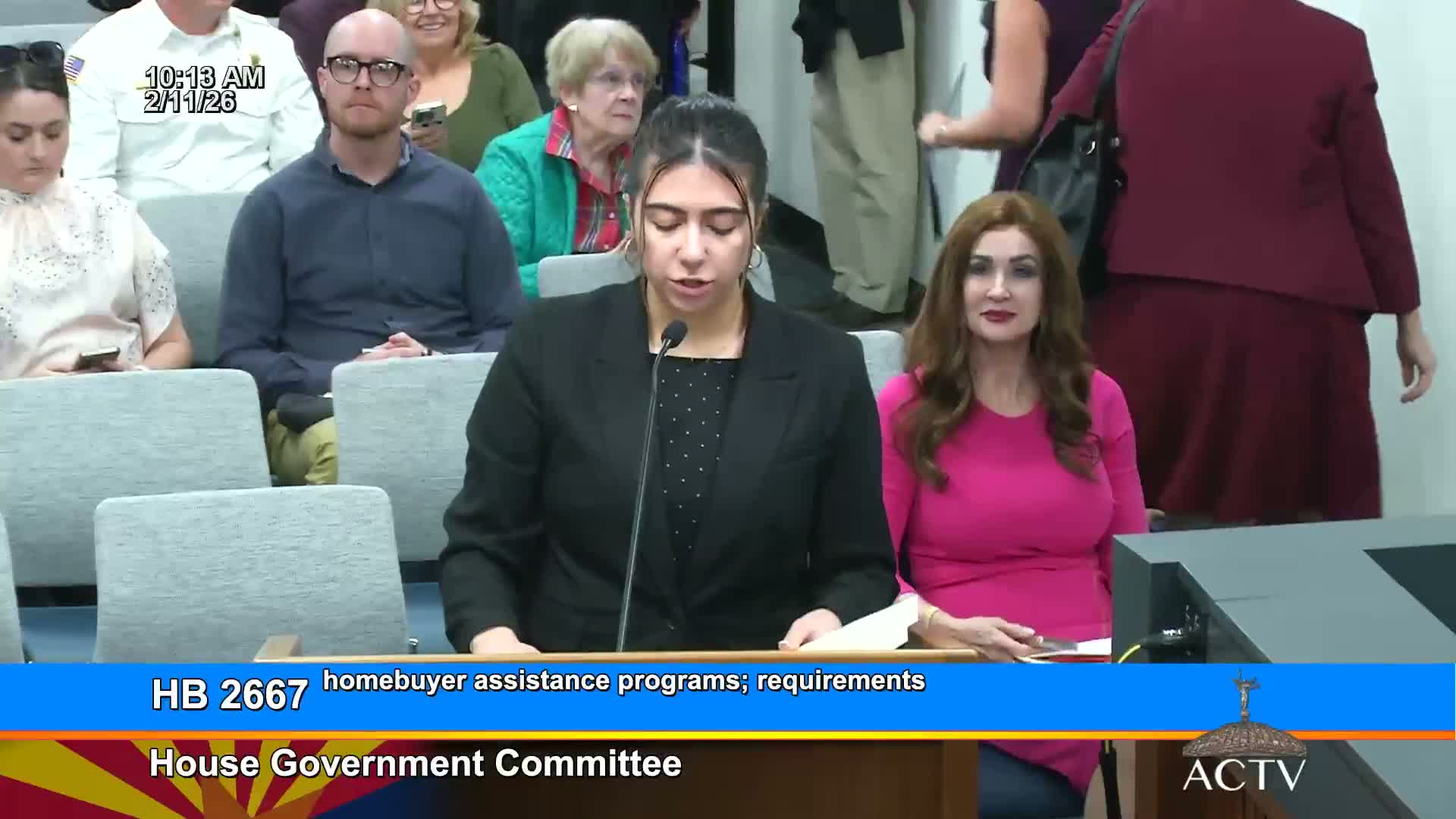
The House Committee on Government gave House Bill 26 67 a do‑pass recommendation after debate over residency, occupancy and potential effects on federal mortgage underwriting.
Sponsor Representative Pamela Carter said the measure would prioritize Arizonans and discourage out‑of‑state investors from using first‑time homebuyer programs for short‑term rentals. "I would like to see this increase to being a resident in Arizona for 2 years, and the home must be owner occupied for 2 years," Carter said, framing the change as a guardrail to ensure participants are invested in their communities.
Members questioned whether extending owner‑occupancy to two years would conflict with federal underwriting standards — particularly FHA requirements — and prompt lenders to stop participating. A Phoenix IDA board member and Representative Marquez noted the state program is administered through multiple entities and that many local down‑payment programs operate under federal eligibility rules; they warned that overly broad state restrictions could reduce access for teachers, health‑care workers and other workforce buyers.
Chairman Blackman encouraged the sponsors to meet with affected stakeholders to work through technical language and potential amendments before floor action. Committee clerks recorded a do‑pass recommendation; members acknowledged a clerical correction during the roll call and asked staff to coordinate an amendment path that preserves access while addressing speculative buyers.
The bill now moves to the House floor; sponsors and opponents signaled willingness to continue negotiations during the interim to avoid unintended consequences that could shrink program participation.