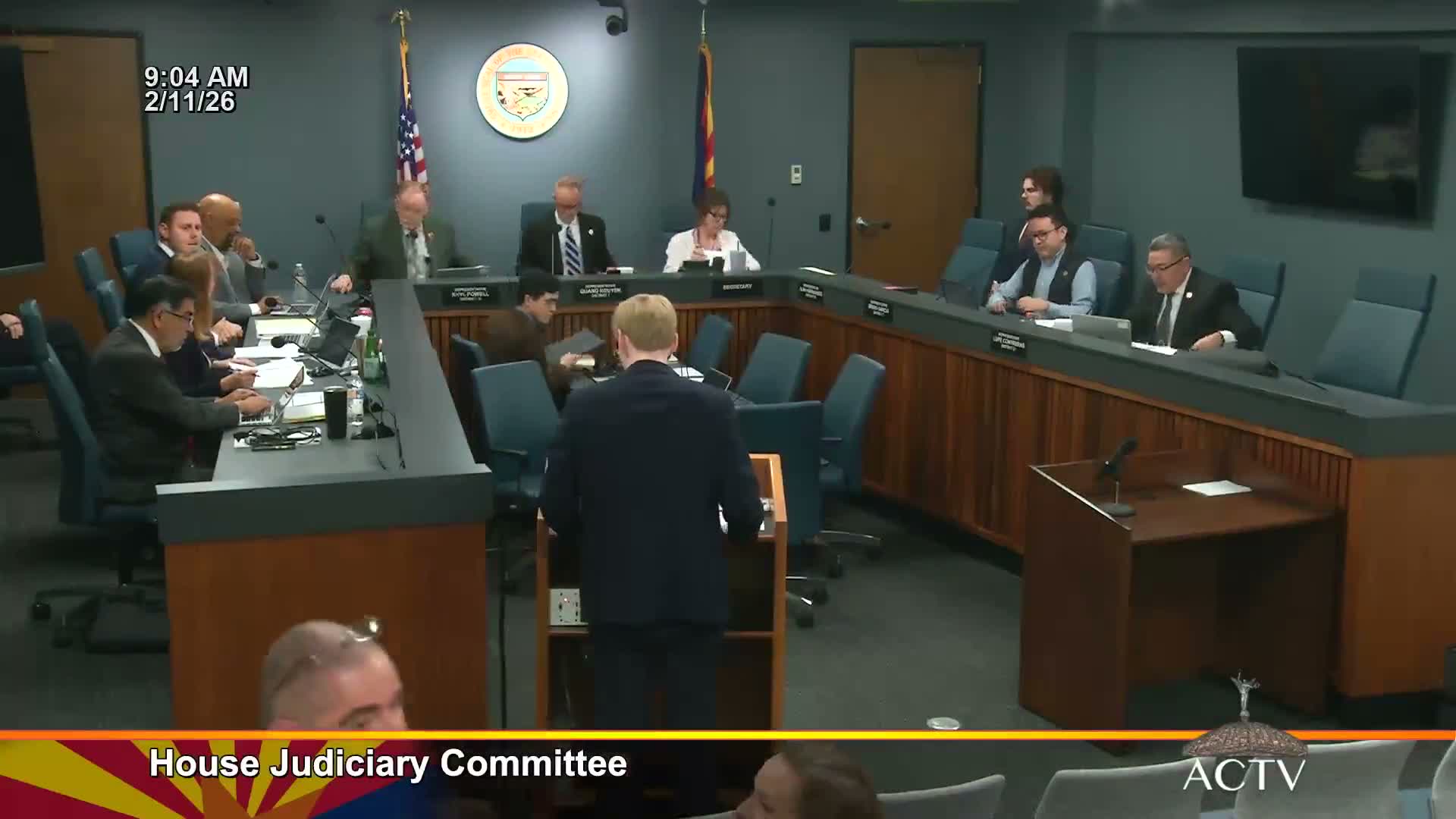
Arizona committee advances bill creating ‘‘civil terrorism’’ offense and new racketeering predicates
Loading...
Summary
The House Judiciary Committee gave HB 21‑36 a do‑pass recommendation after a contentious hearing in which sponsors said the measure targets coordinated intimidation and opponents, including the ACLU and immigrant‑rights groups, warned its broad language could criminalize protest and chill First Amendment activity.
The Arizona House Judiciary Committee voted to advance HB 21‑36, a bill that would create new state offenses labeled "civil terrorism" and "subversion" and allow those offenses, along with felony disorderly conduct and riot, to serve as predicate acts for racketeering prosecutions.
Sponsor remarks framed the bill as drawing a line between protected protest and coordinated criminal intimidation. "Arizona's citizens absolutely do have the right to assemble, speak and protest," a sponsor told the committee, adding that "what they do not have the right to do is to organize in groups to block highways, attack officers, destroy property and intimidate civilians." The sponsor said the proposal is intended to give prosecutors tools to pursue coordinated campaigns of intimidation.
Opponents urged caution and said the bill's language is dangerously broad. Marilyn Rodriguez of the ACLU of Arizona said HB 21‑36 "is another attempt to criminalize speech, protest, and activism," and warned the statute could impose harsher penalties based on viewpoint. "Under the plain language in the text of 21‑36, persons can be charged with a classified felony if the action is motivated by disdain for the United States government," she said.
The hearing included extended questioning from committee members about hypothetical applications. Multiple members asked whether the bill would apply to events such as the Jan. 6 attack on the U.S. Capitol or local 2022 protests at the Arizona Capitol. A sponsor and other proponents replied that some elements of those events could meet the bill's definitions — particularly coordinated efforts to block thoroughfares or to occupy buildings — but emphasized that federal jurisdiction, use of weapons and other separate offenses may mean those facts are charged under other statutes.
Experts and policy advocates offered competing frames. Tal Fortgang, a legal policy fellow at the Manhattan Institute, argued the bill targets "civil terrorism" as coordinated mass commission of minor crimes meant to intimidate or coerce a population and said the measure enhances penalties for conduct already unlawful, such as blocking roads or vandalism. Other witnesses from immigrant‑rights groups and rural organizations said the bill’s wording could be used to punish nonviolent collective action and silence communities by enabling prosecutors to treat collective protest as terrorism without a clear, narrow standard.
Public testimony included immigrant‑community speakers who said coordinated civil actions are essential to their communities, and at least three witnesses opposed the measure. The committee ultimately gave HB 21‑36 a do‑pass recommendation by a 6‑3 vote.
The bill now moves toward floor consideration; sponsors and opponents said they expect continued debate and possible amendments.
Ending: Committee action was procedural — HB 21‑36 was recommended do‑pass and will proceed in the legislative process; supporters and critics signaled follow‑up negotiations and possible floor amendments.