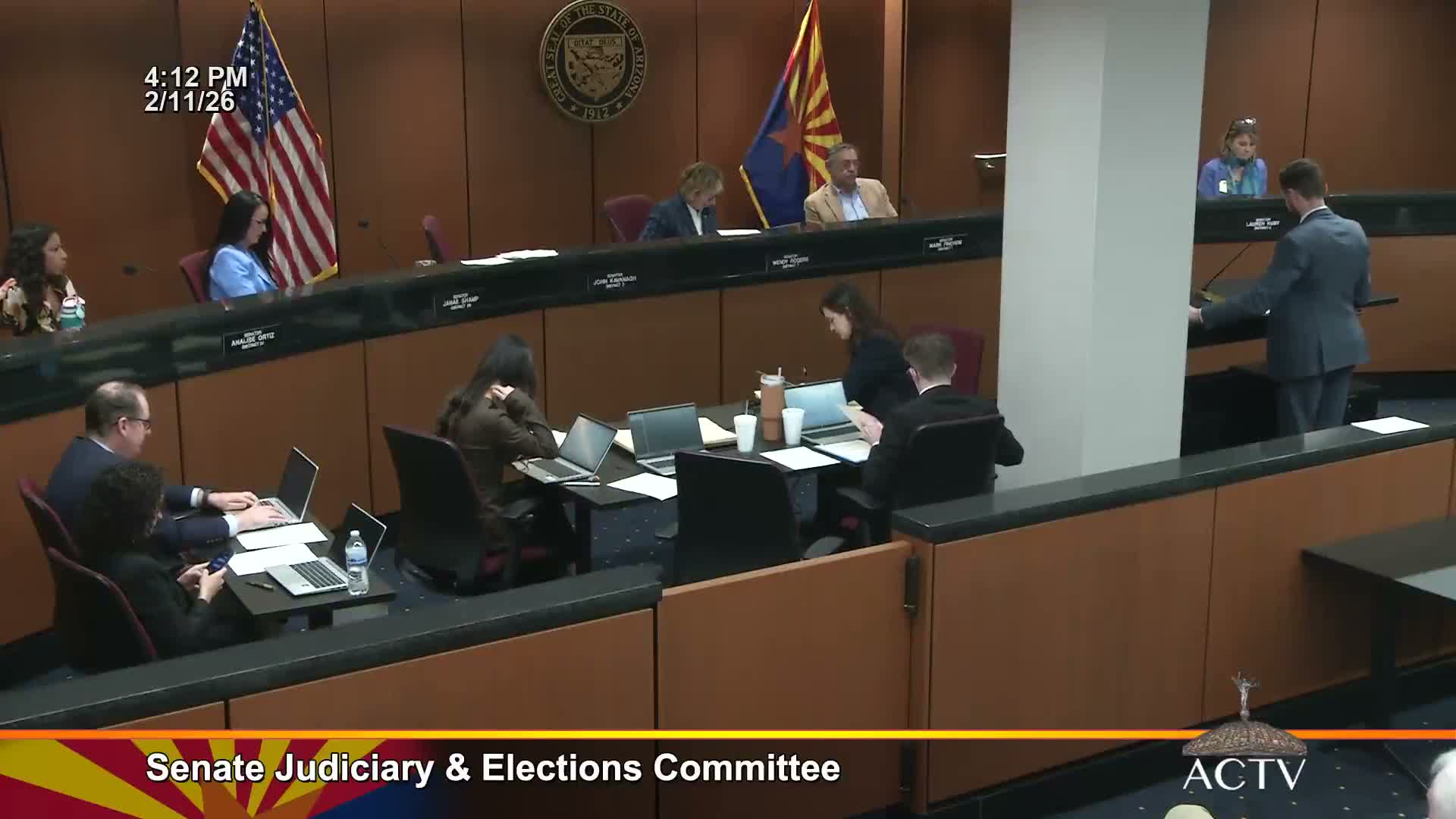
Senate committee advances SB1275 to allow sentencing discretion for some veterans and first responders
Loading...
Summary
SB1275, which would let judges impose lesser terms or suspend sentences instead of mandatory prison for certain nonviolent offenses when service-related mental health conditions apply, received a due-pass recommendation after testimony both supporting judicial discretion for veterans/first responders and opposing groups warning it could undermine mandatory sentencing and victims' rights.
The Arizona Senate Judiciary & Elections Committee advanced SB1275, a bill that would permit courts to impose lesser imprisonment terms or suspend sentences in lieu of probation for certain offenses that currently carry mandatory prison terms, when specified conditions (including service-related mental health conditions) are present.
Staff explained the bill requires the court to consider whether mandatory prison would result in injustice to the defendant, whether mandatory prison is necessary to protect the public, and whether the defendant has a mental health condition linked to military service or first-responder employment; the option is not available for dangerous crimes against children, domestic violence, certain sexual offenses, or criminal enterprise convictions.
Senator Gowen, speaking in support, said the bill creates a "relief valve" for veterans and first responders with nonviolent crimes and argued judges need discretion to consider service-related PTSD and get defendants needed help. Jordy Clark of the Arizona Association of Counties testified in respectful opposition on behalf of county sheriffs and county attorneys, saying the bill would "undermine mandatory sentencing, conflict with the victim's bill of rights, and risk creating inconsistent sentencing outcomes." Clark also referenced ARS 13-701 as an existing mitigation vehicle and urged opposition.
Kurt Altman (Right on Crime), a former prosecutor, countered that the bill provides limited and carefully circumscribed judicial discretion similar to a federal safety-valve mechanism in effect since 1994 and would not eliminate mandatory minimums in the ordinary case. After debate and explanation of votes, the committee gave SB1275 a due-pass recommendation.
What happens next: SB1275 moves to the full Senate. If the bill proceeds, floor debate will likely revisit the tension between limited judicial discretion for service-connected mental health cases and concerns about consistency and victims' rights.