
XR DNA pitches 'elastic vector addresses' to Arizona committee for space and infrastructure coordination
Get AI-powered insights, summaries, and transcripts
Subscribe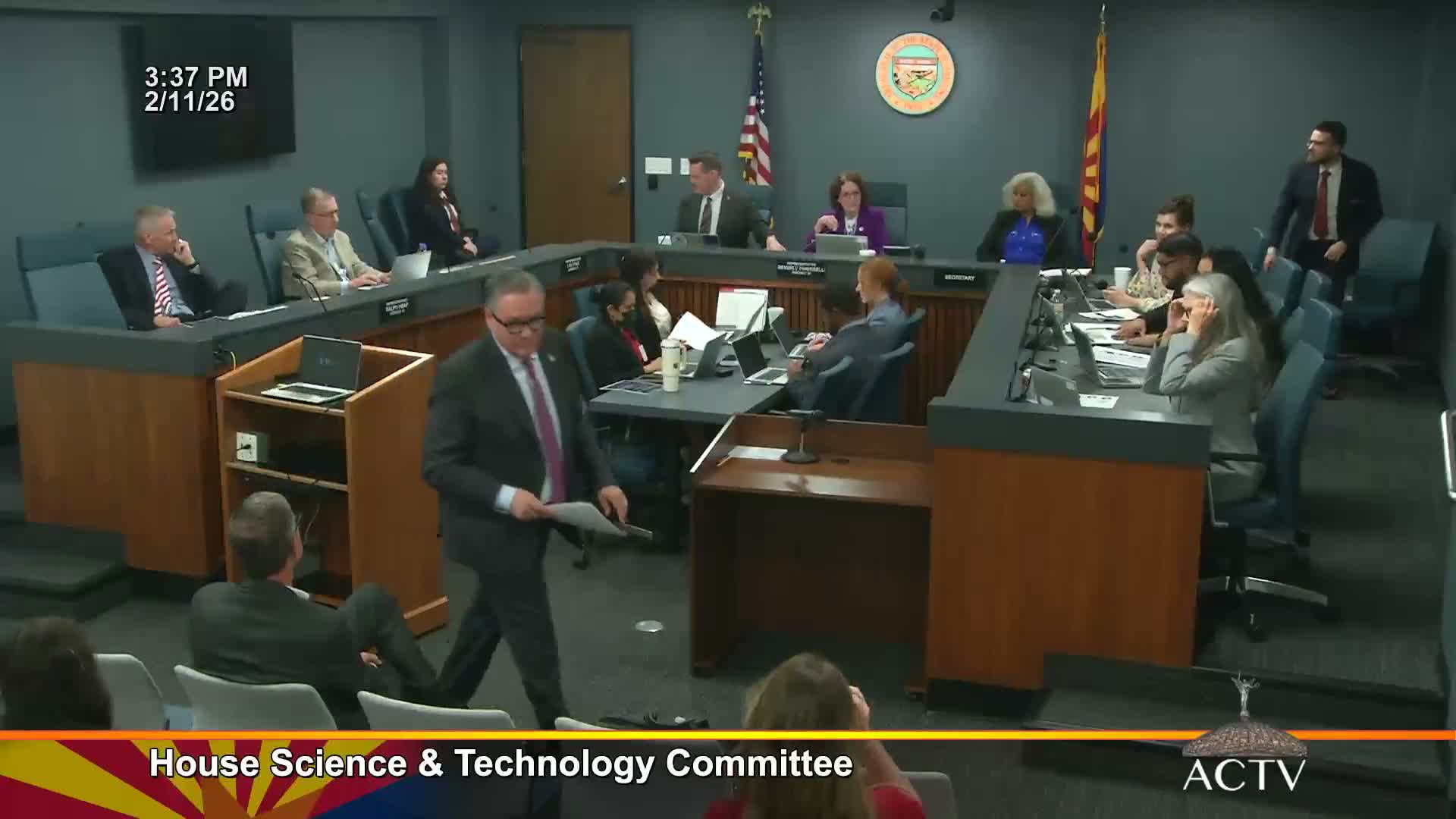
Summary
XR DNA CEO Charles Adelman described an addressing system (EVA) that assigns precise spatial‑temporal identifiers to physical assets to improve interoperability across satellites, logistics and autonomous platforms; he said pilots with launch providers and Space Force are underway.
Charles Adelman, chief executive of XR DNA, told the House Science and Technology Committee on Feb. 11 that the company’s elastic vector address (EVA) is designed to give disparate systems a shared spatial‑temporal identifier so they can reference the same real‑world object or event without sharing control.
Adelman said EVA functions like a street address with a time stamp, precise enough for satellites, launch operations and autonomous platforms. He described a companion layer called Mission Fabric that lets different providers share context without exposing raw data or control, and a ‘‘sphere of influence’’ security model that limits visibility and preserves privacy.
Adelman said XR DNA’s work spans more than a decade of IP development and about 3.5 years of technical development; company pilots involve Space Force and rocket launch providers and the firm plans several launches over the next six months. He also said the company uses AI to help present provenance and make the infrastructure usable for end users.
Committee members asked about on‑device deployment, AI use and obstacles to adoption; Adelman said the near‑term challenge is embedding addressing logic on devices and achieving broad adoption across vendors. He recommended starting with pilots rather than large procurements and said Arizona’s varied operating environments make the state a potential leader for testing.