
Jim Wells commissioners table plan to end inmate-transport contract after sheriff warns of higher costs and staffing risks
Get AI-powered insights, summaries, and transcripts
Subscribe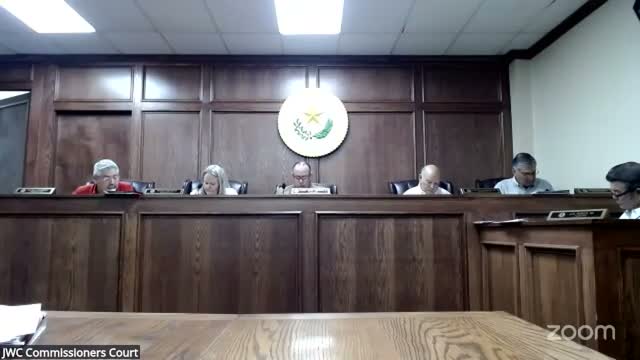
Summary
After an extended exchange with Sheriff Joseph Baker about costs, staffing and liability, the Jim Wells County Commissioners Court voted to table a proposal to terminate the county's contract transport service with Sunrise FSB and asked a multiagency committee to meet and return with alternatives by March 7.
Jim Wells County Commissioners Court on Feb. 13 tabled a proposal to give 30 days' written notice to terminate the county's contract transport service with Sunrise FSB after Sheriff Joseph Baker warned that ending the contract without a replacement plan would increase costs and strip deputies from patrol and jail duties.
Baker, who said he filed a packet with statutory duties, cost comparisons and staffing-impact memoranda, told the court that contract transports are the lower-cost option in most cases. "Terminating the contract increases cost. It does not reduce cost," he said, citing a cost-analysis that shows county in-house transports average about $1,300 per trip compared with $550 to $650 per trip for contract services. Baker also said contract transports prevented the removal of roughly 1,488 deputy hours in a single month and described January's transport billing as unusually high because of long hospital stays for some inmates.
The sheriff framed the issue as both fiscal and operational. He urged the court to identify a replacement plan before ending the contract, noting state-mandated transport duties (court orders, mental-health, medical and juvenile transports) and the Texas Commission on Jail Standards requirements for supervision and cell conditions. "If we end that today, we put the county at extreme exposures to liability," he said, emphasizing recent in-jail suicide attempts that required immediate intervention.
Commissioners questioned staffing history, whether the sheriff had reassigned personnel previously used for transports, and whether the county could save money by hiring an internal transport team. Commissioner Gonzales and others pushed for clearer numbers and for the auditor to run a complete cost comparison that includes overtime, vehicle wear and benefits. The judge and other commissioners said they wanted to keep more work and funding in-county if it is demonstrably cheaper and feasible.
To resolve the dispute, the court agreed to reinstate regular multiagency meetings with the sheriff, county attorney and auditors. The judge directed the committee to present a prioritized list of near-term actions that could reduce transport costs (such as expanded virtual appearances, consolidated transports and scheduling discipline) and asked for a report back to Commissioners Court on March 7. In the meantime the court tabled the termination item by voice vote.
What's next: The court scheduled follow-up committee meetings and asked staff to produce an updated cost-comparison and an implementation plan that would show the fiscal and staffing implications of replacing contract transports with an in-house team.