Public defender warns office is 'in survivor mode,' asks legislature for staff, technology and panel attorney pay
Loading...
Summary
Maryland Public Defender Natasha Dartique told a Senate subcommittee that the Office of the Public Defender is understaffed and under-resourced, asking for competitive pay, $2.2 million a year for digital evidence tools, and funding to stabilise the panel-attorney system and meet Assisted Outpatient Treatment obligations.
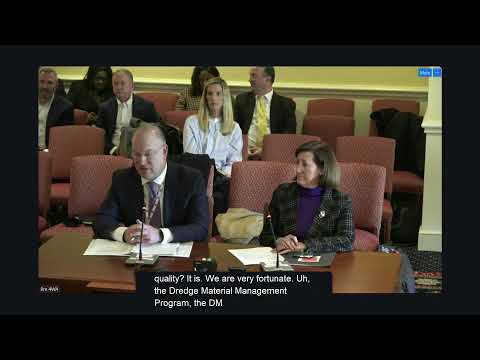
Natasha Dartique, Maryland public defender, told the Senate Budget and Taxation Committee’s Public Safety, Transportation and Environment Subcommittee on Feb. 13 that the Office of the Public Defender is operating “in survivor mode” and asked lawmakers for targeted resources to meet constitutionally required representation.
The Department of Legislative Services’ operating analysis, presented by budget analyst Scott Benson, shows the FY27 allowance for OPD decreases by about $3.3 million to $174.3 million but includes deficiency appropriations totaling $16.3 million in general funds to cover prior shortfalls. DLS flagged persistent vacancies, noting 104.5 vacant positions as of Dec. 31, 2025, and recommended restoring a budgeted turnover rate to 6.41% and restricting some deficiency funds to panel-attorney use.
Why it matters: Dartique and other witnesses said OPD handles a very large portion of the state’s criminal caseload and that rising case complexity has multiplied the time required per matter. “We are on an island,” Dartique said. “We’ve been surviving through grit and creativity, not because we have what we need.” The office reported handling 116,330 new cases in FY25 and a surge in juvenile cases; a national workload study cited by OPD suggests Maryland may need roughly 1,560 to 1,875 attorneys for adult trial work alone.
Dartique outlined five specific requests: allow OPD to fill critical vacancies with competitive compensation to improve retention; provide $2.2 million annually for digital evidence management and transcription tools so all attorneys can search and transcribe video and phone data; support panel-attorney recruitment and raise hourly pay; fund representation required by the Assisted Outpatient Treatment (AOT) law; and achieve pay parity with the Attorney General’s Office for comparable positions.
DLS and OPD officials differed on some budget assumptions. Benson said the FY27 allowance includes a $1.2 million increase for panel attorneys and a $5-an-hour increase to the standard $60 rate, while noting the budgeted panel-attorney amount in FY27 remains lower than recent actual spending. DLS recommended adding committee narrative requests for OPD reporting on panel attorney use and expenses, and tightening language so certain deficiency funds be used only for panel fees.
OPD witnesses highlighted technology as a high-return investment. The office said it has 81 licenses for a platform called JusticeText to serve 625 attorneys—about 13% coverage—and that providing agency-wide digital evidence tools would cost roughly $2.2 million annually. Jennifer Curran, OPD chief operating officer, said pilot projects cut time reviewing footage from hours to minutes and estimated labor-value savings over 10 years in the low hundreds of millions.
Union and local office testimony echoed the plea for more resources. Carly Towne, a felony attorney and AFSCME Local 423 board member, described high caseloads and burnout that push experienced attorneys to leave. Jim Dills, Baltimore County district public defender, said his office handled more than 22,500 cases in 2025 with 53 attorneys and stressed that discovery frequently includes gigabytes or terabytes of video, phone and other digital evidence.
On AOT, OPD said it submitted a fiscal note and estimated the need for roughly 20 attorneys to start statewide implementation; the office said it received no dedicated funding in FY26 or FY27 for that mandate. DLS repeated its request that OPD explain how prior-year panel-attorney funds were reallocated and how OPD will cover shortfalls if actual costs exceed the FY27 allowance.
The subcommittee did not take formal action on the OPD budget at the hearing; the panel moved on to review other agencies after the testimony and Q&A.