
Hood County residents press for moratorium on data centers; commissioners split, tighten conditions on Comanche Circle
Get AI-powered insights, summaries, and transcripts
Sign Up Free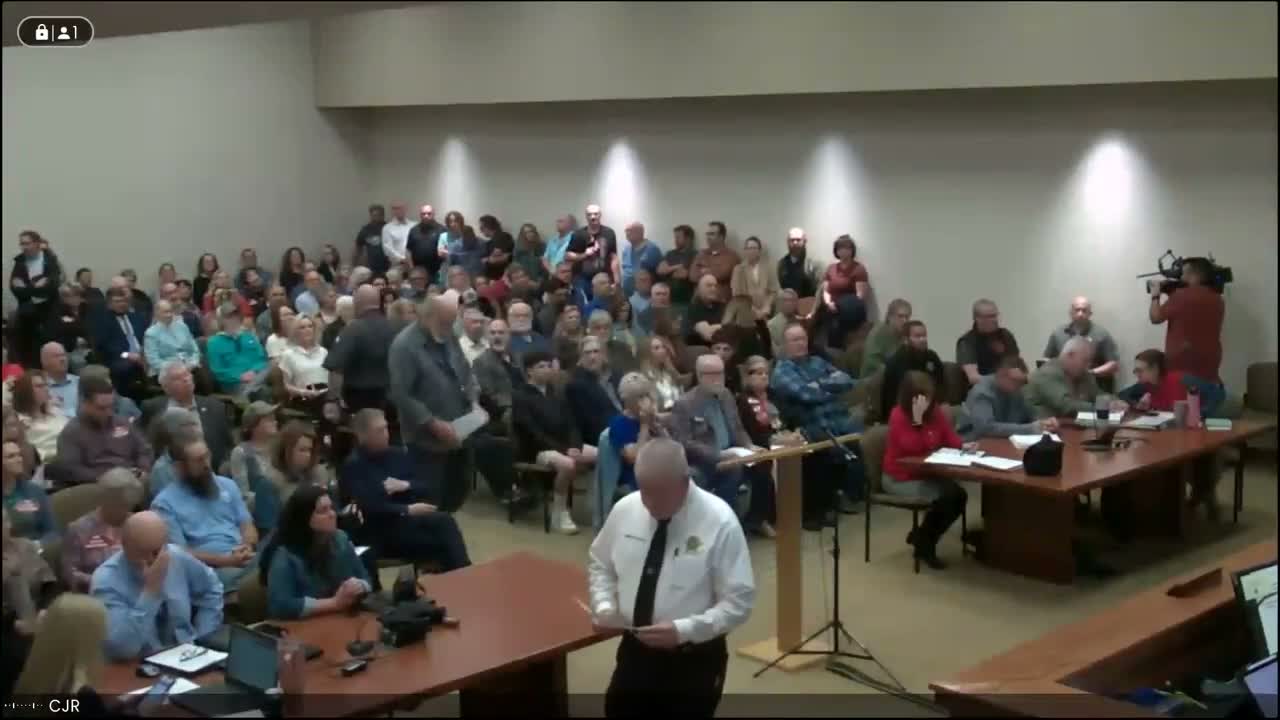
Summary
More than 20 residents told the Hood County Commissioners Court on Feb. 10 that proposed multi‑hundred‑acre data‑center campuses and companion gas power plants threaten wells, the Paluxy and Brazos watersheds, county air quality and property values. The court debated a proposed moratorium, failed to adopt a broad moratorium order, and later approved stricter conditions for the Comanche Circle concept plan.
Hood County residents filled the commissioners' courtroom on Feb. 10 to urge the court to pause approval of large data centers and associated gas‑fired power plants until independent studies address water, wastewater, air and noise impacts.
Speakers representing multigenerational landowners, local conservation groups and medical professionals told the court they fear projects sited near the Paluxy Valley will deplete wells, discharge contaminated cooling blowdown into the watershed and expose neighbors to hazardous air pollutants. "We just need the water and the quality air," said Diana Wright, whose family has lived in the Paluxy Valley for five generations. Pediatrician Dr. Shannon Watts warned of asthma, cardiovascular and cancer risks tied to emissions from combustion turbines used to back up data centers.
The court considered an amended order that would have imposed a temporary moratorium while staff and consultants revised county permitting rules. Commissioner Samuelson moved the revised moratorium language, which would have also directed the county to review state guidance relevant to critical‑infrastructure risks; the motion failed on a 3–2 voice vote as announced by the bench. Several speakers pressed commissioners to pause approvals at least until the county completes a comprehensive water and environmental analysis.
Separately, the court revisited a previously conditionally approved concept plan for Comanche Circle, proposed by Sailfish Investors with an associated NRG power center. Commissioner Andrews outlined a list of additional conditions the developer must meet before a site development plan can be filed, including a complete comprehensive drainage plan, demonstration of an approved water source and wastewater treatment approach (including any necessary TCEQ approvals or documented exemptions), compliance with Upper Trinity Groundwater Conservation District requirements, a traffic impact analysis using county‑approved assumptions for narrow roadways, and noise and light mitigation plans to protect adjacent rural uses and wildlife. The court approved the modified conditions (3–2), effectively resetting timelines tied to the project's earlier conditional approval.
Developers and proponents warned against an overly broad moratorium. Michael Klein, head of U.S. project development for EE North America, asked the court to exclude projects such as the Rain Lily solar and storage project — which he said had engaged county staff for years — or to grant a 30‑day deferral so ongoing projects could be reviewed. Public Citizen and other participants recommended financial due diligence measures for applicants, including surety bonds and proof of financial viability before incentives or approvals are granted.
What happens next: The court left in place stronger conditions for Comanche Circle and several other regulatory actions, and pulled a standalone moratorium item from the agenda for further work. Residents pressed commissioners to accelerate reviews of cumulative water and air impacts and to work with regional partners; several speakers said they will press state lawmakers and regulators if local action is insufficient.
Votes and formal actions: The court recorded a failed motion to adopt the revised moratorium order (motion failed 3–2) and later approved the modified conditions for the Comanche Circle concept plan (motion passed 3–2).