
Port Jervis finance official outlines $4.7 million rollover shortfall, presents 2% levy as part of options
Get AI-powered insights, summaries, and transcripts
Subscribe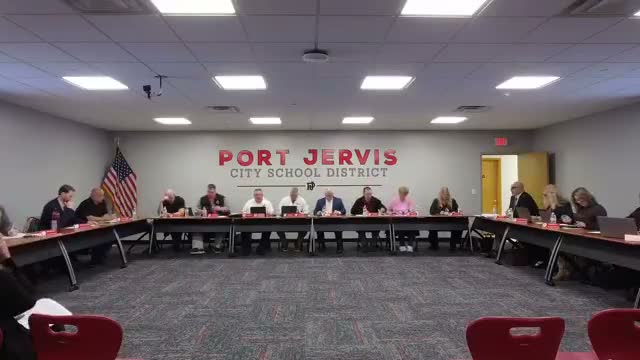
Summary
Assistant Superintendent for Business John Tim told the Port Jervis board the district faces a potential $4.7 million shortfall if there is no tax increase or fund-balance use; options include a 2% tax levy, drawing down additional fund balance and targeted expense reductions. Budget adoption is planned for April 23 and the vote is May 19.
Assistant Superintendent for Business John Tim presented the district’s annual rollover budget and told the Port Jervis City School District Board of Education the numbers show a clear shortfall if the board chooses neither a tax increase nor a larger draw on reserves.
“If we have 0 tax increase and we don't use fund balance, our deficit … is $4,700,000,” Tim said, describing a scenario that would leave the district with a multi‑million dollar gap. He enumerated the major cost drivers: salary increases (about $1 million year‑to‑year), benefits (roughly $700,000), special‑education tuition (about $1.5 million) and transportation (an approximate $150,000 increase). Tim said those increases, combined with rising utilities and other costs, produce the shortfall.
Tim walked the board through options to close the gap: modest tax‑levy increases, using a portion of the district’s fund balance, and targeted reductions in non‑automatic accounts such as contractual expenses, travel, materials and supplies. Under a sample scenario Tim presented, a 2% levy combined with a $2.5 million fund‑balance draw would reduce the deficit to roughly $1.6 million. Tim said the district’s total fund balance is about $15.5 million and that the state guideline for reserves is near 4% of the budget.
“I'm trying to scare you right now,” Tim said, characterizing the fiscal picture candidly while urging the board to weigh the long‑term tradeoffs of repeated zero levies. He emphasized that small, regular increases build the local tax base and provide a cushion if state aid falls.
Tim told the board he would return with a formal tax recommendation after further analysis and public discussion. He also outlined the calendar: the administration plans to present a more detailed budget and tax proposal at a future tax meeting, adopt the budget on April 23, and hold the public budget vote and school board election on Tuesday, May 19 (7 a.m.–8 p.m.) with voter‑registration day set for April 29.
What happens next: the board will receive follow‑up presentations and a formal tax‑rate recommendation ahead of the April adoption and the May vote. The board has multiple fiscal levers — levy increases, reserve use and spending reductions — and will need to choose a combination that balances financial stability with tax‑payer impact.