Get Full Government Meeting Transcripts, Videos, & Alerts Forever!
House committee advances bill to codify de novo review, limit agency deference
Summary
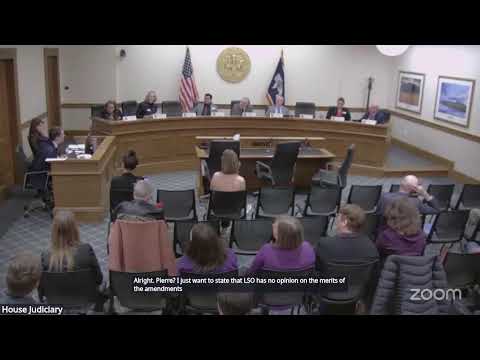
The House Judiciary Committee voted to advance House Bill 66, which would require courts reviewing Administrative Procedures Act appeals to interpret statutes and agency decisions de novo and limit judicial deference to agency interpretations. Supporters said it restores judicial independence; opponents warned of separation‑of‑powers risks.
Vice Chair Representative Singh introduced House Bill 66 to clarify how courts should review agency decisions under the Administrative Procedures Act, saying the bill requires courts to "interpret the meaning of the statute, rule, regulation, or final decision, and effect de novo." He told the committee the measure is short, carries no fiscal note and would take effect July 1.
Singh said the bill is designed "to simultaneously reinforce judicial independence while also separating that branch of government from…
Already have an account? Log in
Subscribe to keep reading
Unlock the rest of this article — and every article on Citizen Portal.
- Unlimited articles
- AI-powered breakdowns of topics, speakers, decisions, and budgets
- Instant alerts when your location has a new meeting
- Follow topics and more locations
- 1,000 AI Insights / month, plus AI Chat