
Commissioners clear 0.25% local sales‑tax question for ballot; committee outlines $2.3M estimate and education plan
Get AI-powered insights, summaries, and transcripts
Subscribe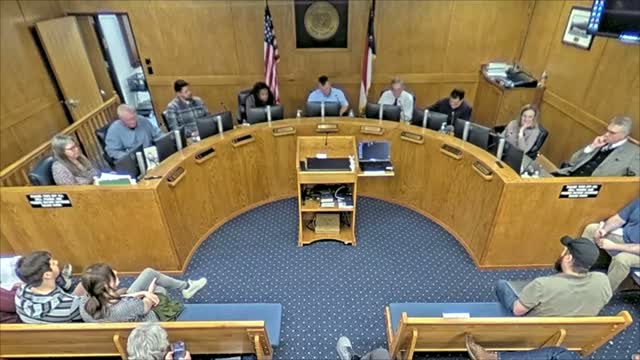
Summary
The board voted 4‑1 on Feb. 10 to adopt a resolution asking voters whether to authorize a 0.25% county sales‑tax; a county committee presented an education plan and estimated the measure could raise about $2.3 million annually if approved.
On Feb. 10 the Macon County Board of Commissioners voted 4‑1 to adopt a resolution placing a quarter‑cent (0.25%) local sales‑tax question before county voters.
Commissioner Shields presented the work of a citizen committee preparing public education for the measure. Committee members said the state prescribes ballot language but that county officials must explain how revenue could be used; the committee estimated revenue of about $2.3 million annually on current local purchasing patterns and said roughly 40% of that amount is likely to come from visitors rather than residents.
The committee outlined permitted uses and constraints under North Carolina law: some funds may be used for school capital projects (with statutory limits), and the board must pass a separate resolution describing intended uses if the measure reaches the ballot. Committee members emphasized that the board’s resolution asks voters whether to allow the tax and does not itself levy the tax or mandate how funds must be spent.
Commissioner Sherrill and others stressed the committee will focus on education, not advocacy, and said county funds cannot be used to promote a particular position. Members said public outreach will begin in earnest late summer and intensify in the three months before the election.
The board approved the resolution to place the question on the ballot by a 4‑1 vote; one commissioner dissented, saying he would not attach his name to a resolution supporting the referendum though he would respect the public's will if it passed.
Next steps: the committee will finalize an outreach plan and the board will consider a resolution describing intended uses if voters approve the measure.