
Residents urge Macon County commissioners to slow proposed redistricting; counsel outlines legal paths
Get AI-powered insights, summaries, and transcripts
Subscribe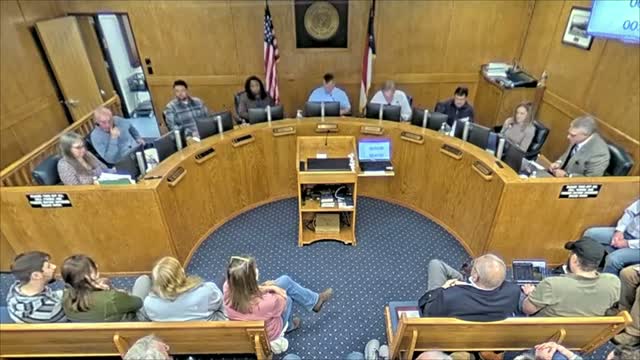
Summary
Dozens of residents at a Feb. 10 public hearing urged commissioners not to rush a plan to change the county’s commissioner structure to three districts plus two at‑large seats, calling for more public study or a voter referendum; county counsel said the exact 3+2 design would require a local act in the General Assembly.
Dozens of Macon County residents and civic leaders told the Board of Commissioners on Feb. 10 that a proposed change to the county’s commissioner structure should not be rushed to the state legislature.
The board opened a public hearing on a resolution that would redraw the county into three districts and add two at‑large seats. Speakers including Dr. Joanne Rosner and multiple residents said the proposal risks diluting representation for smaller, rural communities and urged more public study and direct voter input.
"This is not an emergency," Dr. Rosner said, urging commissioners "to be transparent and disclosive with the public." Several commenters called for a referendum and for the board to hold community meetings so residents can see maps and comment on concrete options.
County Attorney/Counsel explained statutory routes the board may use. Counsel said state law provides four referendum structures (including fully at‑large, true electoral districts, primary‑only electoral districts, and general‑residency countywide vote) and noted a separate option: a local act through the General Assembly for governance forms not described in the referendum statutes. "The proposed 3 districts with 2 at‑large seats would require a local act," counsel said, meaning that particular configuration cannot be adopted by a simple voter referendum under current statute.
Commissioner Sherrill, who sponsored a prior iteration of the proposal, said the intent is fairness: to allow residents of Districts 1 and 3 the same opportunity to elect multiple representatives that residents of District 2 currently have. He cited a long‑standing county practice and a 2002 North Carolina Supreme Court ruling (in the legislative context) to argue that a mix of single‑member and multi‑member seats raises legal questions.
Board members responded to public concerns by proposing steps that would slow the process: preparing visual maps, commissioning a study or committee to compare options, and scheduling public forums outside the commissioner chambers. Several commissioners said they want more time to see precinct‑level plans and to confer with the state Board of Elections or consultants before deciding whether to move forward to the General Assembly.
Next steps: the board did not adopt a redistricting ordinance at the Feb. 10 meeting; commissioners asked staff to return with visual proposals and information on referendum language and statutory requirements for future public discussion.