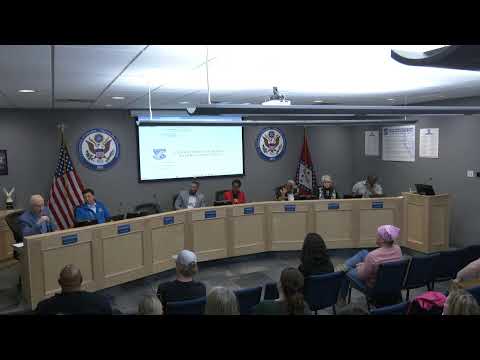
Public commenters press Conway School Board over open-meetings ruling and undisclosed settlement offer
Loading...
Summary
Public commenters told the Conway School Board that a judge found multiple open-meeting violations and that the district’s attorneys did not present a proposed settlement to the full board; board counsel and the district said timing and litigation practice shaped how the proposal was handled.
Jimmy Kevin, a member of the public, opened the meeting’s patron comments by saying a judge had found the board violated open-meeting rules six times and that his attorney sent a proposed agreed order to district counsel that was not presented to the full board. “That order never went before the board,” he said, and he urged the board to publicly question district counsel about why the settlement was not placed on a board agenda.
Tyler Moses, another longtime public speaker, raised related transparency concerns and cited a recent article documenting continuing FOIA problems and alleged improper uses of executive session. “What’s the point of surveys, focus groups, and public messaging about transparency if it just goes in one ear and out the other?” Moses asked, calling for clear disclosure of materials and reasons when the board moves into executive session.
Jay Beckett, who represents the district, said the proposed settlement offer had been sent to him shortly before trial and that he forwarded it to General Counsel Shasta Wagner and discussed it with the three board members who had been subpoenaed to testify. Beckett said those members and counsel believed the district had meritorious defenses and that the timing — a few days before the hearing — made it impractical to present the proposal to the full board without a special meeting: “Sometimes settlement proposals are presented to the entire board for a vote. Sometimes they are not in my experience as an attorney,” he said.
Shasta Wagner, the district’s general counsel, confirmed the district has policies and that she and other staff followed established procedures in consulting with the involved members. Wagner also outlined the complaint and grievance policies that exist for other matters and said the district would continue to examine process improvements.
Board members asked whether a continuance or a special meeting could have allowed full-board consideration; Beckett said a continuance was possible but that, in this instance, the timing and prior litigation scheduling shaped counsel’s response. Several board members said they would like clearer processes so settlement proposals and other significant legal items come before the full board when feasible.
The board did not take further public action on the settlement at the meeting. Board discussion indicated a desire to evaluate procedures and consider whether additional training or routine agenda practices could increase transparency going forward.