Get Full Government Meeting Transcripts, Videos, & Alerts Forever!
Get email alerts on the Sba 8a Native Program topic
No spam. Unsubscribe anytime.
Senate committee opens oversight of SBA's 8(a) program, chair defends Native participation
Summary
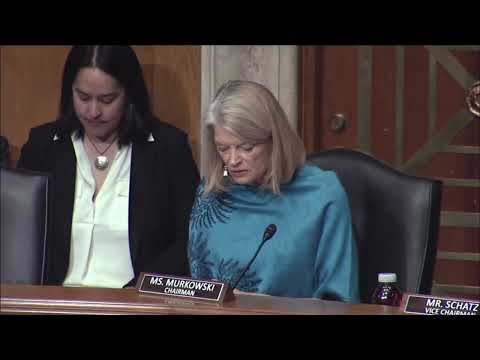
The Senate Committee on Indian Affairs opened an oversight hearing on the Small Business Administration's 8(a) program. The chair defended Native entity participation, cited a letter from SBA Administrator Kelly Leffler saying the native 8(a) program is not a DEI program, and invited testimony from Alaska witnesses.
Chair opened the Senate Committee on Indian Affairs' oversight hearing and said the committee will examine the Small Business Administration's 8(a) Business Development Program and its role in economic self-determination for Native communities. The chair called the program "a success story" and said, "It's not a fraud as some have mistakenly alleged."
The chair framed Native entity participation in 8(a) as grounded in congressional authority over Indian affairs and the federal trust responsibility, rather than in race-based or diversity-equity-inclusion policy. He said Congress in the 1980s made Native entity-owned firms eligible for the program and later reaffirmed and expanded that inclusion.
The chair noted differences in statutory treatment for firms owned by tribes, Alaska Native corporations (ANCs), and Native Hawaiian organizations compared with firms owned by individuals, explaining that entity-owned firms are accountable to entire Native communities and are expected to reinvest earnings in community priorities.
Addressing recent criticism, the chair said he would enter into the record a letter from SBA Administrator Kelly Leffler confirming that "the native SBA 8 a program is not DEI." He also raised questions about whether revenues and earnings from 8(a) participation are producing sufficient community benefits and said ongoing reviews by colleagues and federal agencies should be grounded in facts and the law.
The chair described Alaska's distinct history under the Alaska Native Claims Settlement Act (ANCSA), noting Congress amended ANCSA to clarify that ANCs are eligible to participate in 8(a) and that access to federal procurement was part of settlement-driven economic development for communities transitioning from non-cash subsistence economies. He said the 8(a) program has been pivotal in building managerial leadership and business capacity in Alaska Native communities.
The chair concluded by saying witnesses involved in Native 8(a) contracting, including individuals who traveled from Alaska, would testify about how the program advances economic self-determination and tribal self-sufficiency consistent with congressional intent.