
Winston‑Salem/Forsyth Schools expand middle‑school career exposure with VR and job‑shadow pilots
Get AI-powered insights, summaries, and transcripts
Sign Up Free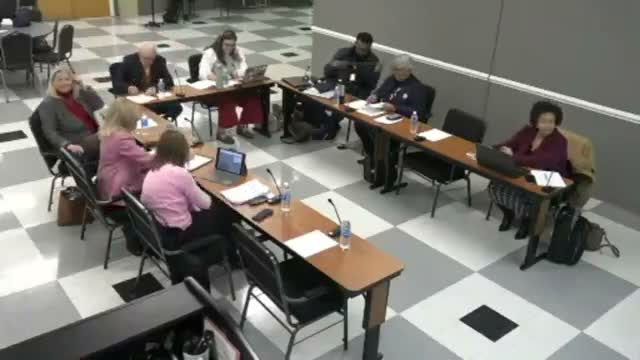
Summary
Dr. Kimberly Forbes told the curriculum committee the district is pushing career and technical education (CTE) down into upper elementary and middle grades using VR career‑exploration units, job‑shadow days with local businesses and classroom supports; expansion is constrained by declining enrollment and funding.
The Winston‑Salem/Forsyth County Schools curriculum committee heard an update on Career and Technical Education on Feb. 10 from Dr. Kimberly Forbes, the district’s director of Career & Technical Education. Forbes said the district is working to "push down" career awareness into upper elementary grades and to better connect middle‑school students to high‑school pathways.
Forbes highlighted a virtual‑reality initiative that lets students experience over 50 simulated careers. "Our district is number 1 in the nation in using these VR" devices, she said, adding the district logged more than 6,000 simulations this year and uses that data to track student exposure and interest. The district currently has 25 VR units; staff said wider purchases would be considered if funding allows.
The committee also heard about a pilot job‑shadow program called Students at Work, planned for March and April. Forbes said about 18 businesses have committed so far and the program will let middle‑school students apply for four‑hour job‑shadow slots, practice interview and application skills, and receive an offer letter as part of the experience. "We're going to have the students applying for the job — here's how you fill out a job application," she said.
Board members asked how the CTE expansion aligns with local labor‑market needs and whether students not enrolled in CTE classes will get access to VR. Forbes said CTE programming is shaped to feed local employer demand — citing advanced manufacturing, IT and healthcare — but expansion is limited by enrollment declines and corresponding funding drops. She said counselors discuss CTE options during registration and that staff are scheduling VR days and teacher support visits so each middle school gains exposure to the tools.
On outreach to younger students, Forbes described elementary events such as a planned "Touch‑a‑Truck" day to let children see career equipment. She said logistics for large elementary participation are still being finalized and that district staff will continue to seek business partners and school‑level coordination.
Forbes invited board members to try the VR simulations and offered follow‑up data on slots, utilization and measures of program success. The committee did not take action on the CTE update.
The committee's next regular meeting is scheduled for Feb. 24, 2026.