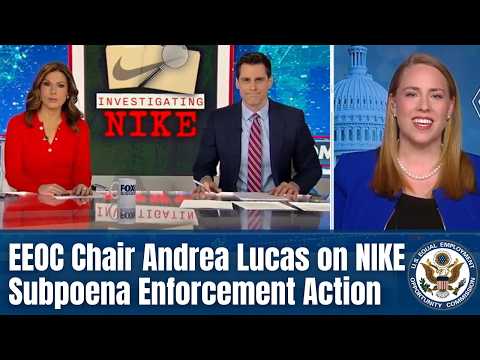
EEOC says it has opened subpoena-enforcement probe of Nike over alleged bias against white employees
Get AI-powered insights, summaries, and transcripts
SubscribeSummary
The Equal Employment Opportunity Commission has opened a subpoena-enforcement investigation into Nike after allegations that white corporate employees were disproportionately targeted in layoffs; Nike called the action an "unusual escalation" and the inquiry is pending in court.
The Equal Employment Opportunity Commission has launched a subpoena-enforcement investigation into Nike after allegations that white employees in the company’s corporate workforce were treated unfairly and disproportionately targeted for layoffs, EEOC Chairwoman Andrea Lucas said in an interview.
Lucas, who identified the inquiry as an ongoing subpoena-enforcement action, said the agency’s court filings allege "broad systemic race discrimination" tied to the company’s diversity, equity and inclusion programs, mentoring and leadership-development practices. "What matters is how [a program] functions," she said. "If you're taking any employment action motivated in whole or in part based on race or another protected characteristic, that's unlawful discrimination."
A statement attributed to Nike and read on the program called the EEOC’s move "a surprising and unusual escalation," saying the company had participated in the agency's inquiry "in good faith" and that it is committed to fair and lawful employment practices. The host asked whether Nike’s statement was truthful; Lucas said such disputes will be decided in court.
Lucas described the legal path the EEOC can pursue when an employer does not cooperate: the agency may issue a subpoena and seek enforcement in federal court. "If the court upholds the enforcement of the subpoena, you will be forced to turn over materials," she said. She added that the ultimate outcomes of EEOC investigations can include monetary recoveries for affected workers — "hundreds of thousands or millions of dollars" — and stressed that the EEOC is a remedial agency that seeks money for workers rather than imposing fines.
The interview also addressed whether employers might relabel programs (for example, using terms such as "belonging" or "inclusion") while maintaining discriminatory practices. Lucas said the label is immaterial to the agency’s inquiry: the focus is on whether employment actions were motivated by protected characteristics.
The investigation has been pending for over a year, Lucas said. Nike’s refusal to comply with the subpoena, as cited by the EEOC, has prompted the agency to pursue enforcement in court. No court ruling or final agency finding has been announced, and the matter remains under investigation.
The EEOC directed workers who believe they have been harmed to file charges through eeoc.gov. The interview concluded with Lucas thanking the hosts.