
Consultant summarizes focus‑group findings; planners outline state‑driven zoning changes
Get AI-powered insights, summaries, and transcripts
Subscribe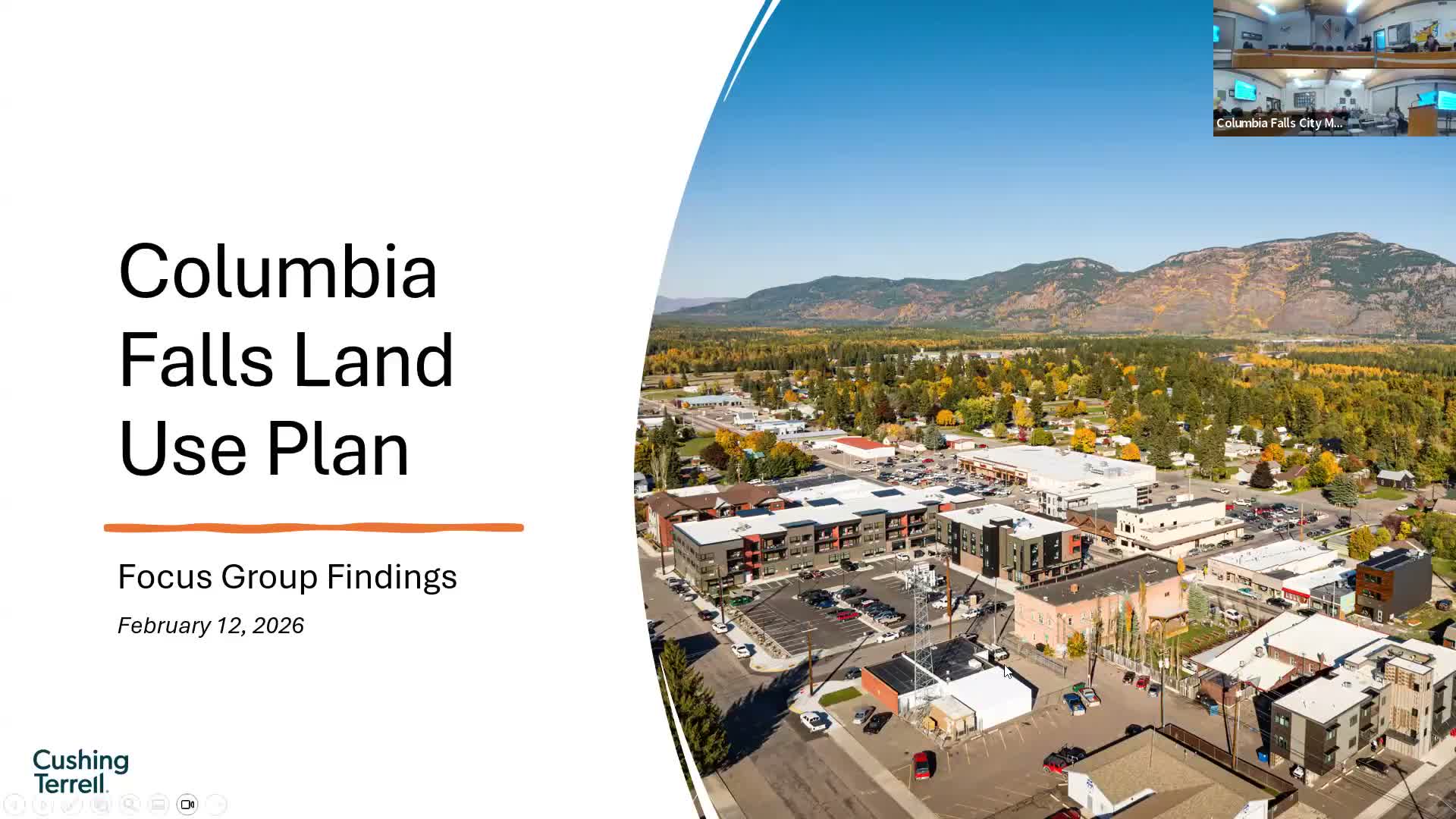
Summary
Cushing Terrell summarized focus‑group findings highlighting housing shortages, river and trails preservation, childcare constraints, and options to ease lot sizes and ADU rules. City planners outlined state bills that mandate permitting ADUs/duplexes and increase commercial heights and altered parking requirements, shaping the forthcoming land‑use code rewrite.
Consultants and city planning staff used the meeting to update the commission on community focus‑group findings and on how recent Montana legislation limits and directs local zoning decisions.
Consultant Nora Bland, director of planning for Cushing Terrell, reviewed summary themes from focus groups and stakeholder interviews: housing affordability and availability are limiting employers’ ability to retain staff, summer conversions of long‑term units to short‑term rentals worsen staffing stress during peak season, the community values preserving river access and regional trail connections, and childcare facility development is constrained by state building requirements. Bland said detailed notes and a focus‑group PDF are available on the project website.
City planner Eric Mulcahy described how recent state bills affect the city’s code rewrite: certain housing types such as duplexes, accessory dwelling units and mixed‑use multifamily have been enabled in a wider set of zones; building heights in commercial and industrial zones have been raised to as much as 60 feet; and Senate bills have limited some local parking and use‑control options. Mulcahy said the city must adopt at least five housing strategies under the Montana Land Use Planning Act and proposed using performance standards to manage administratively reviewed uses. He warned that some decisions are no longer purely local.
Why it matters: The land‑use plan and zoning rewrite will determine what kinds of housing and development are allowed in Columbia Falls and how the city balances growth with open‑space, view and near‑river protections. Commissioners emphasized the need to preserve pedestrian streetscapes and examine setbacks, viewsheds, and form‑based solutions where possible given state constraints.
Follow up: Staff committed to incorporate feedback on fire‑hazard mapping, update maps to reflect recent land transfers (including newly designated wildlife management areas), and provide an annotated summary of what neighboring gateway towns (Kalispell, Whitefish, Bozeman) are doing for comparison.