Get Full Government Meeting Transcripts, Videos, & Alerts Forever!
Get email alerts on the Government Ethics topic
No spam. Unsubscribe anytime.
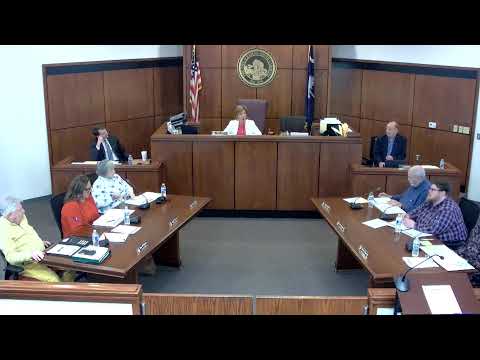
Easley council amends acceptable-use policy for elected officials after debate over enforcement and device access
Summary
Council members debated an amendment to the Acceptable Use Policy for elected officials, striking a sentence that would have required offending elected officials to reimburse the city for costs; concerns included First Amendment protections and city-email access on personal devices.
The Easly City Council on Jan. 22 amended and adopted an Acceptable Use Policy (AUP) for elected officials after extended discussion about enforcement language and technical access to city email.
A councilmember from Ward 4 said she could not sign the policy as written and objected to the AUP’s origins and the requirement that some prior outgoing members had approved it. That councilmember also said she was unable to access her city email on her personal device and raised concerns about the policy’s reach. "I will not put anything on my phone that can be foyed," she said during discussion (paraphrase in transcript). The record shows she intended to continue using her city email for official business and include the city address for transparency when using personal accounts.
Another member proposed an amendment to strike the final sentence of Section 11, which would have required "the offending elected official" to reimburse the city for costs incurred by unacceptable uses. The amendment was seconded and carried; the presiding official confirmed the amendment and moved to vote on the AUP as amended. The presiding official said the city attorney had provided legal explanations and that the work-session discussion addressed First Amendment concerns.
Councilmember opposition and questions during debate focused on whether the AUP was already in place for employees, whether the policy protected free-speech rights for elected officials, and on practical issues of accessing city emails on personal devices. After the amendment and clarifying discussion, the council voted to adopt the amended AUP; the presiding official recorded "all in favor" and "none opposed."
The council directed the city attorney and IT staff to confirm device email access and to finalize distribution of the AUP to elected officials. A councilmember asked that any final version not undermine state and federal obligations for elected officeholders; the presiding official reiterated that the policy’s purpose is to protect the city from litigation related to equipment use.
The transcript does not record the exact final AUP text beyond noting the deletion of the last sentence of Section 11; the removed sentence read in the meeting as requiring reimbursement by offending elected officials for city costs incurred.