Get Full Government Meeting Transcripts, Videos, & Alerts Forever!
Get email alerts on the Taxation Digital Services topic
No spam. Unsubscribe anytime.
Boone County adopts ordinance allowing electronic delivery of property tax statements
Summary
Boone County commissioners suspended rules, held a public hearing with no public comments and adopted Ordinance 2026‑02 to allow residents to opt in to receive an exact electronic replica of their tax statement; implementation will require registration, a DLGF form and vendor setup, with first e‑statements planned for April 2027.
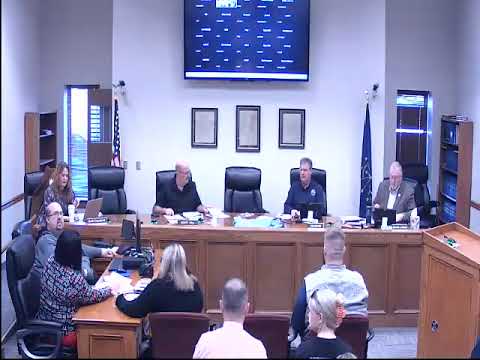
Boone County commissioners voted Feb. 9 to adopt an ordinance authorizing electronic delivery of property tax statements for residents who opt in.
Boone County Treasurer Nikki Baldwin explained the ordinance and the opt‑in process, saying the e‑notice would be an "exact replica" of mailed statements but would require a registration and parcel‑verification process. "If you opt in, you will not receive it in the mail," Baldwin said, and noted that registration would begin when annual tax statements are mailed; if the vendor detects a bounced email, a paper statement will be mailed instead.
The board voted to suspend the usual notice rules and opened a public hearing; there were no public comments, and commissioners approved the ordinance by voice vote. Baldwin said implementation will require completion of a Division of Local Government Finance (DLGF) form and vendor registration; if streamlined, registration would start in 2026 and e‑statements could be sent in April 2027 because the county mails tax statements once per year.
Commissioners did not record individual roll‑call votes in the transcript; the motion to adopt passed by voice vote. Baldwin said the county will work with vendors and state forms to align processes and encouraged interdepartmental cooperation on outreach and process design.