Get Full Government Meeting Transcripts, Videos, & Alerts Forever!
Get email alerts on the Local Economy topic
No spam. Unsubscribe anytime.
Mayor urges ‘shop local’ as Auburn leaders outline sales-tax reliance and small-business support
Summary
Mayor Kelly Davis and city officials told an Auburn town hall the city depends heavily on sales tax for day-to-day services, described how the city retains roughly 1% of a typical 7.25% sales-tax receipt, and outlined grants and tactics to convert visitors into local customers.
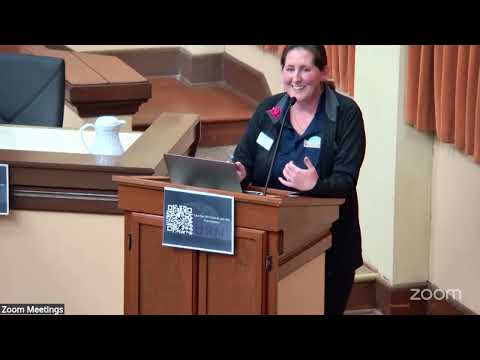
Mayor Kelly Davis told a packed Economic Development Committee town hall that Auburn’s choices at the cash register matter for funding core services and keeping businesses viable.
At the meeting, Davis and city staff described the scale of local government spending and where tax dollars go. Davis said the city’s overall operating budget is roughly $32 million and that taxes — including sales and property tax — fund a large share of the general fund. "$19,000,000, the blue, taxes," Davis said, adding that sales tax is the most flexible local revenue.
City Manager Sean Rabay explained how sales tax works in Auburn: the total sales-tax rate at retail is 7.25%, the mayor and staff said, with roughly 6 percentage points going to state and other jurisdictions and the city receiving about 1 percentage point of each taxable dollar. Davis offered an example intended to show scale: "If you're 1 person and say you're spending a $100 a month in town, you'll get make about $12 a year for the city," she told attendees, illustrating how small regular purchases add up across the population.
Officials tied the revenue to specific services. "We pay for our police. We pay for fire. We pay for administrative ... public works," Davis said, listing patrol, fire protection, road maintenance and routine city services the general fund supports.
The discussion also touched on limits to property-tax growth — Rabay referenced the constraints of Proposition 13 — and how low turnover in long-held housing stock can keep property-tax revenue relatively flat. "Property tax just goes up a little bit each year," Rabay said.
City staff described a small-business grant program launched last year to help fill long-vacant storefronts and lower the cost of opening in Auburn. Rabay said the program provides "last-mile funding" for non-labor items such as fixtures and furniture; he named two projects that received assistance, saying "The Vault received a grant. $40,000 for fixtures for that building to get opened up," and that Hillmont received comparable support.
Organizers closed by asking residents and business owners to participate in future quarterly town halls and to share ideas for attracting visitors and keeping dollars in town. The Economic Development Committee said it will use the feedback for marketing work and noted it has two volunteer openings for business-interested residents.
What’s next: the committee will collect the QR-based audience responses for use in marketing plans and is planning additional outreach events.