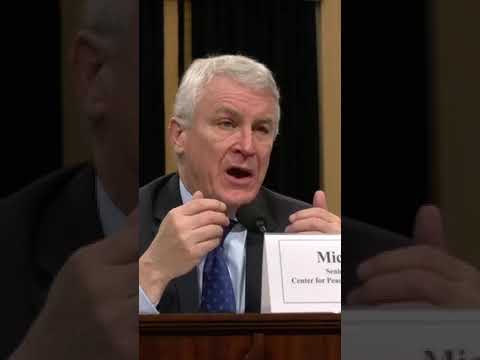
Witness urges U.S. push to broker Turkish-Israeli accommodation and shape Syria as buffer state
Loading...
Summary
An unidentified witness told the Commission on Security and Cooperation in Europe that Turkey seeks Syrian unity to prevent a PKK-linked autonomous border zone while Israelis fear Syria becoming a Turkish military front; the witness urged a White House-led effort to foster a Jordan-style buffer state in Syria.
An unidentified witness told the Commission on Security and Cooperation in Europe that Turkey wants Syria kept whole and that Ankara sees all ethnic groups in Syria as Syrians, not as the basis for separate political entities. The witness said this stance is motivated both by security concerns — notably preventing a PKK-linked autonomous statelet on Turkey's border — and by a broader Turkish national outlook.
The witness said, “They want them to be Syrians,” characterizing Ankara’s approach to ethnic identities inside Syria. The testimony framed Turkish policy as a mix of pragmatic border security and deep-seated national ideology.
The witness also described how Israelis view the region. He said Israelis see Turkey as an “ideological Islamist power” that could expand into vacuums left by Iran’s retreat and that Israelis fear Damascus and its forces as a hostile Islamist power. The witness argued a central Israeli fear is “that Syria will become a Turkish military base and a front” that could be used against Israel.
The witness suggested these mutual fears and regional competition — including activity in places like Somaliland — increase rivalry between Turkey and Israel. He recommended an active U.S. role to help the parties “come to an accommodation,” proposing that policy could help Syria emerge as a buffer state similar to Jordan.
The witness emphasized that such an outcome would require sustained engagement from the White House and serious diplomatic work to build trust and practical cooperation among the parties. No specific policy prescriptions, timelines, or statutory authorities were cited in the testimony.
The commission hearing did not record a formal response from other participants to these characterizations during the segments provided; the remarks were presented as the witness’s assessment and recommendation for U.S. mediation.