
West Palm Beach reports $37.5 million in investment earnings; officials stress "safety-first" strategy
Get AI-powered insights, summaries, and transcripts
Sign Up Free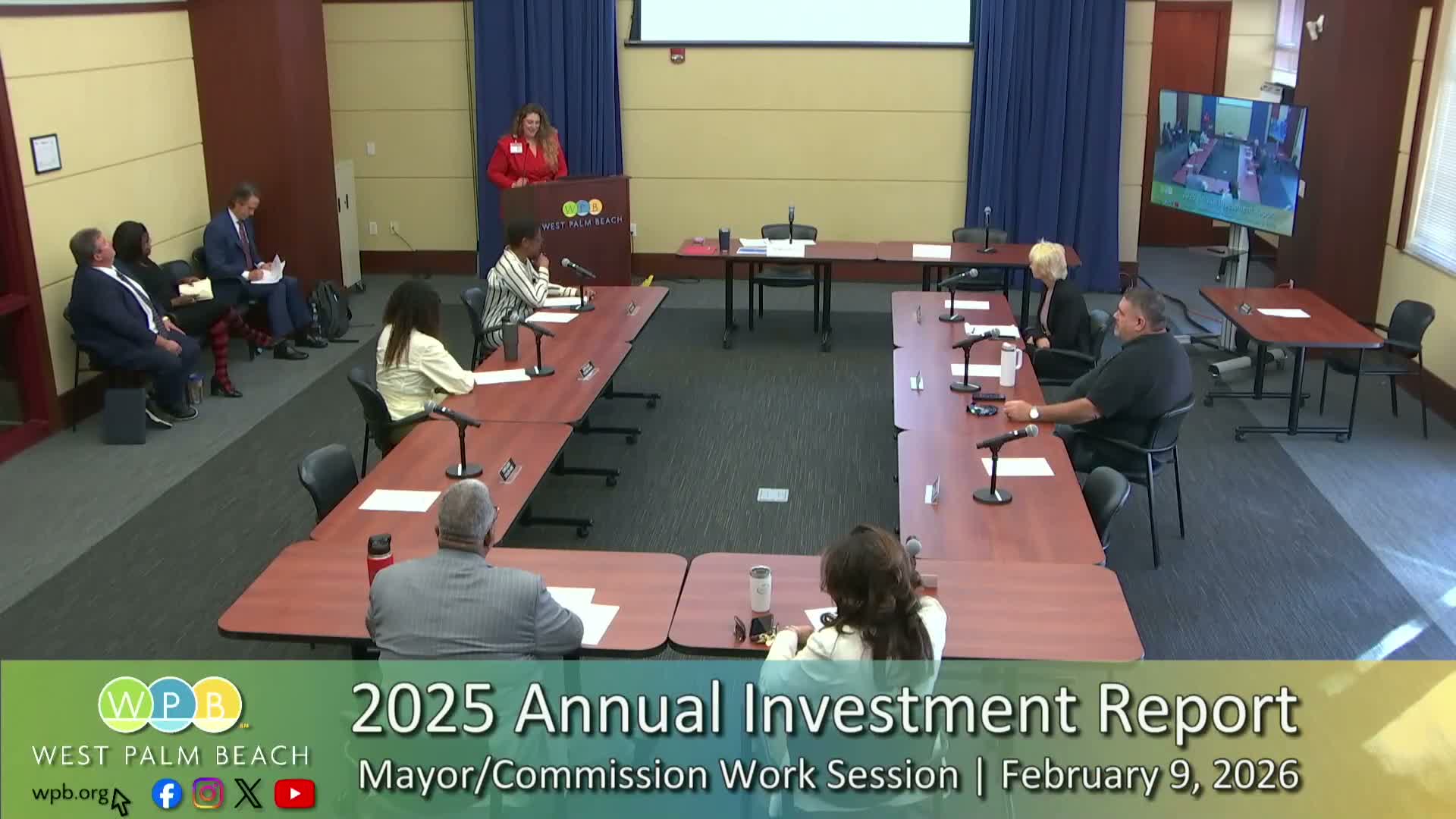
Summary
City officials and PTMA Financial Solutions told the mayor and commission Feb. 9 that the city's investment program earned about $37.5 million in fiscal 2025, with a book yield near 4.1% and liquidity just under $327 million; CFO Bridget Soufrant cautioned that final discretionary-balance figures await the fiscal-year audit.
West Palm Beach officials received the city's fourth annual investment report at a Feb. 9 work session, where outside manager John Grady of PTMA Financial Solutions and CFO Bridget Soufrant outlined an economic outlook and reviewed the city's portfolio strategy. Grady said the city's approach emphasized principal safety, liquidity for near-term needs and laddered investments out to five years.
Grady opened with macroeconomic context, noting third-quarter GDP of 4.4% and continued uncertainty from trade tariffs and a variable labor market. He said markets were pricing one to two rate cuts in 2026 and described a relatively flat yield curve that informed PTMA's recommendation to ladder maturities. "We're using a balanced approach with overnight money and laddered investments between really 1 to 2 years out to 5 years," Grady said.
On the portfolio itself, PTMA reported the city's liquidity balance at just under $327 million and a portfolio book yield of roughly 4.1'4.32% (figures presented by the manager). Total investment earnings for fiscal 2025 were reported at about $37.5 million, with roughly $20 million attributable to the long-term portfolio. Grady said the portfolio remained heavily weighted to U.S. Treasuries for safety and that laddering helped capture higher multi-year yields when available.
CFO Bridget Soufrant emphasized that the $37.5 million is allocated across multiple funds and does not automatically translate into discretionary spending. "This interest income does not directly attribute to discretionary fund balance," she said, and cautioned that the city is still completing its fiscal 2025 audit; final discretionary-balance figures could change after auditors finish their review.
Commissioners questioned the city's risk posture and peer comparisons. PTMA and staff said the roughly 50/50 split between highly liquid instruments and laddered treasuries is common among public funds of similar size and that some entities take modestly higher risk with rated corporate notes to seek extra yield. Soufrant described the five-member internal investment committee (CFO, treasury manager, accounting manager, budget manager, procurement official) as advisory; per the city's policy, the CFO holds decision authority.
On portfolio operations, staff said reinvestment of interest income occurs in larger increments (examples cited: $5 million—0 million) after monthly cash-flow reviews; bond proceeds and restricted cash are held with designated trustees and used according to bond terms. Presenters also cited Florida investing rules as constraints on permitted securities and the city's recently updated investment policy.
The presentation included questions about labor markets and AI, with Grady saying the current conversation has shifted toward skill needs rather than wholesale job loss: workers who learn AI tools are more likely to succeed in the changing market. Presenters also flagged longer-term fiscal risks tied to rising federal debt as part of the broader macroeconomic backdrop.
Next steps: staff will finalize audit work on fiscal 2025 and return final discretionary-balance numbers to the mayor and commission once the audit is complete. The commission did not take any formal vote on policy changes during the session.