
Committee Approves Smart Space Act Directing GSA to Study Alternative Financing; Norton Amendment Adds D.C. Experts
Get AI-powered insights, summaries, and transcripts
Subscribe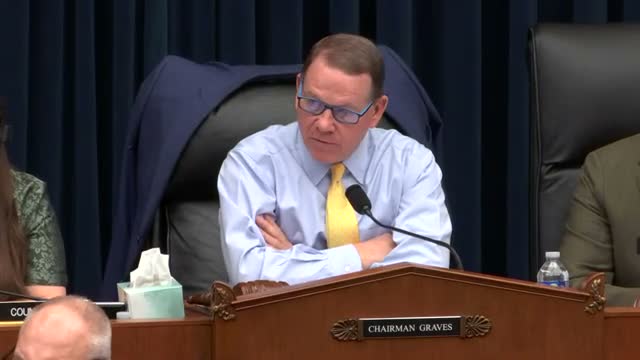
Summary
The panel adopted an amendment in the nature of a substitute to HR 73 88 directing the General Services Administration to identify projects suitable for alternative financing such as public–private partnerships; Representative Norton’s amendment ensured District of Columbia real estate experts are included in consultations.
The House Committee on Transportation and Infrastructure adopted an amendment in the nature of a substitute to HR 73 88, the Smart Space Act of 2026, and ordered the bill favorably reported to the House.
Sponsors said the Smart Space Act would require the General Services Administration (GSA) to consult with real estate experts and identify alternative financing options — including public–private partnerships — for federal buildings that are underused or expensive to maintain. Proponents emphasized the bill does not mandate new construction or direct spending but seeks to provide the president and Congress with project recommendations and a financing strategy.
Ranking member Larson said the bill addresses portfolio-management challenges at GSA, including a maintenance backlog and difficulties in providing upfront appropriations, and noted that identifying projects suited to alternative financing could reduce long-term costs. Larson referenced Office of Management and Budget scoring guidance as a barrier to wider use of alternative financing and noted GSA has been on the Government Accountability Office high-risk list for real property management.
Representative Norton offered and won an amendment clarifying that references to "state" real estate experts include those from the District of Columbia so that DC professionals will participate in consultations; members clarified the amendment does not treat the District as a state. The committee adopted the Norton amendment and then adopted the amendment in the nature of a substitute; HR 73 88, as amended, was ordered favorably reported by voice vote.
The markup record shows proponents highlighted expected accountability, transparency and performance terms in any recommended projects, and supporters said upfront capital may be required to realize long-term savings from consolidation or sale of federal properties. The motion to reconsider was laid on the table.