
Cornwall Central hears budget outlook and facilities committeethree‑proposition plan ahead of March vote
Get AI-powered insights, summaries, and transcripts
Subscribe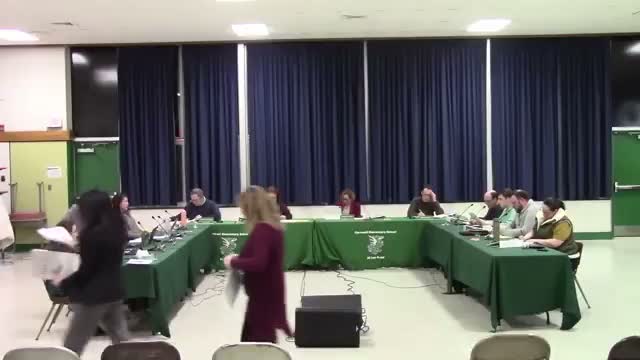
Summary
District finance staff told the board the governor's preliminary aid run leaves Cornwall about $400,000 short of prior expectations and outlined inflating costs (water, TRS/ERS, health insurance). The facilities committee recommended three bond propositions — a tax‑neutral core project, a classroom proposition and a field project — with a board vote expected in March.
The Cornwall Central School District Board of Education on Feb. 9 heard a budget briefing that flagged rising costs and a proposed three‑part capital plan the facilities committee recommended putting before voters next month.
Budget presenter John, a district finance presenter, told the board that the governor's budget run left the district about $400,000 below earlier estimates for state aid and that several cost pressures are driving the 2026–27 outlook. "On the tax levy, every 1% we go up is about $539,000," he said, and noted big line‑item changes including a nearly 94% jump in village water charges (from about $108,000 to $209,000) and expected contribution increases for the State Teachers' Retirement System and the Employees' Retirement System.
The budget presentation paired a needs assessment with a list of staffing and equipment requests: guidance and intervention positions, a bilingual school psychologist, additional teaching‑assistant coverage tied to program restructures, athletic equipment and building‑and‑grounds vehicles, a float nurse position, and an ongoing door‑hardware capital request. The presenter said the current needs assessment total is about $1.8 million and emphasized those priorities may shift as the budget process continues.
Why it matters: rising fixed costs and modest state aid growth can force the district to prioritize staff and capital requests, shift reserves, or adjust the tax levy that funds operations.
Facilities committee recommendation
Separately, the facilities committee outlined three propositions for a future bond vote and recommended the board advance the package for voter consideration. Facilities committee member Jim said the district has roughly $55 million of fiscal space created by prior debt payments "to do, about $55,000,000 worth of work in a tax neutral fashion." The committee recommended: (1) a Proposition 1 core project at roughly $44.5 million structured to be tax neutral using reserves and debt‑service timing; (2) a Proposition 2 classroom‑focused package of about $21 million that would be roughly half tax neutral; and (3) Proposition 3 — a high‑school athletic field project — described in committee discussion as about $14.5 million.
Committee members said they debated whether to move items between propositions to maximize tax neutrality but ultimately left the priorities intact to preserve coherence of the classroom proposal. Committee members and staff discussed aidability and noted the final household impact will depend on how much state building aid is eligible and on local assessed values.
How much would it cost households? The board heard illustrative, order‑of‑magnitude figures: using a $350,000 assessed home as an example, combined Proposition 1 and 2 could raise costs by roughly $18 a month; adding Proposition 3 was discussed as raising the example to about $40 a month. Board members cautioned these are directional estimates and that final numbers will be calculated before any vote.
Next steps: The facilities committee asked the board to take a formal vote on putting propositions on the ballot by the board's second meeting in March. Board members also discussed producing voter‑facing materials that translate large project totals into monthly household impacts and clarified that some project elements may ultimately attract state aid, which would reduce local costs.
No final bond vote was taken on Feb. 9; the committee recommendation will be returned for a formal board resolution and final cost estimates ahead of the March deadline.