Get Full Government Meeting Transcripts, Videos, & Alerts Forever!
Get email alerts on the Public Benefits topic
No spam. Unsubscribe anytime.
Appropriators back welfare‑fraud bill that tightens eligibility verification
Summary
The committee voted 5‑0 to report Senate File 106, which tightens verification for public benefits including checks of residency and citizenship and curbs self‑attestation; state agencies said many measures are already in place but asked for timing/implementation tweaks.
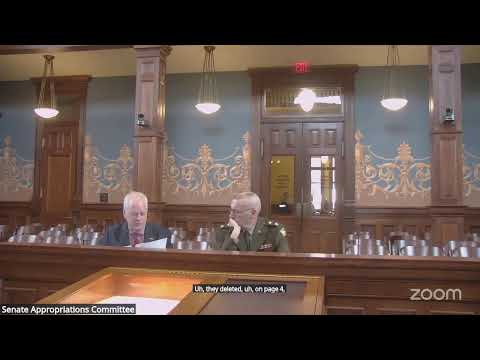
The Senate Appropriations Committee reported Senate File 106, labeled a welfare‑fraud prevention package, after testimony from agency officials and an administration‑backed advocate that the bill would codify verification steps for SNAP, Medicaid and other benefit programs.
Sponsor framing and key change: The sponsor described the bill as an update to ensure public benefits go to eligible Wyoming residents, stating that those here illegally should not receive benefits. The bill would prohibit self‑attestation of eligibility in many programs and require enhanced verification, including checks of residence, citizenship and multi‑state enrollment.
Public and agency testimony: Jeff Daugherty of FGA Action said the measure is an administration priority and committed to working with department leadership on specific issues. Corin Schmidt, director of the Department of Family Services, told the committee many provisions are already implemented for SNAP and other assistance programs but requested small changes and collaboration with LSO. Stefan Johansen of the Department of Health similarly urged deconfliction so responsibilities between DFS and the Department of Health are clear.
Systems and timing: Jesse Springer, the state Medicaid agent, told the panel that while some checks are performed in real time, other functions — such as cross‑state enrollment checks — currently run quarterly and federally supported monthly/real‑time systems will not be available for several years. He recommended adjustments to implementation timelines accordingly.
Outcome: After agencies and public testimony, the committee adopted the usual motion and voted by roll call; five ayes were recorded and SF106 was reported 'do pass.' The sponsor and agencies said they will work on technical drafting and timing issues to align statutory requirements with federal system capabilities.
Next steps: The bill advances to the Senate floor; agency concerns about timing and system capability are likely to produce targeted amendments on implementation details.