Get Full Government Meeting Transcripts, Videos, & Alerts Forever!
Get email alerts on the Artificial Intelligence topic
No spam. Unsubscribe anytime.
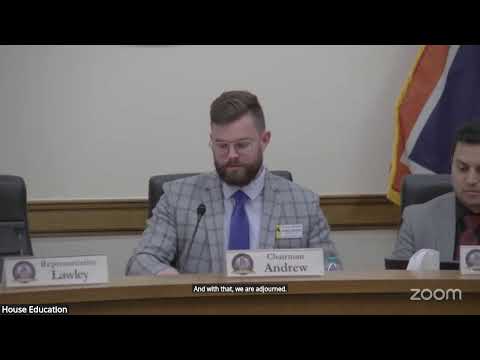
Committee passes AI bill with telecom liability exemption after industry and survivor testimony
Summary
The Select Water Committee advanced HB 102, banning nonconsensual AI-generated sexual material, restricting AI systems that promote self-harm, and adding protections for interactive computer services; an adopted amendment exempts platforms and telecoms consistent with 47 U.S.C. provisions.
Representative Veil presented House Bill 102 as a package to protect children and adults from nonconsensual AI-generated sexual material, to prohibit AI systems that promote self-harm, and to address interactive-platform actions that could censor political speech. The sponsor walked members through definitions, criminal provisions for synthetic sexual material, and provisions limiting civil liability for some AI developers.
Mister Schwab, who has worked on human-trafficking cases internationally, described the rise of AI-generated child sexual abuse material and its circulation on the dark web and some open platforms. He told the committee investigators are finding thousands of new images daily and warned that AI tools can generate explicit material of known victims from selfies and public images, re-victimizing survivors.
Industry representatives raised concerns that broad language—such as provisions that "distribute, transmit, or otherwise make available" material—could sweep in communications and hosting platforms that do not create content. Jody Levin (Charter/Verizon) and Beth Lance (AT&T) urged clarifying exemptions so platforms are not treated as primary defendants when content is provided by third parties; both emphasized platforms will continue to cooperate with law enforcement under subpoenas.
The committee adopted an amendment, moved by Representative Bridal, explicitly exempting interactive computer services, information services, and telecommunications services as defined in 47 U.S.C. §§230(f)(2) and 153 from liability for third-party content. Members discussed implementation implications and law-enforcement use of AI tools; Representative Singh indicated he would consult further with enforcement agencies before floor debate.
The committee took a roll-call vote on HB 102 as amended and the clerk recorded seven ayes and two excused; the bill passed the committee.